

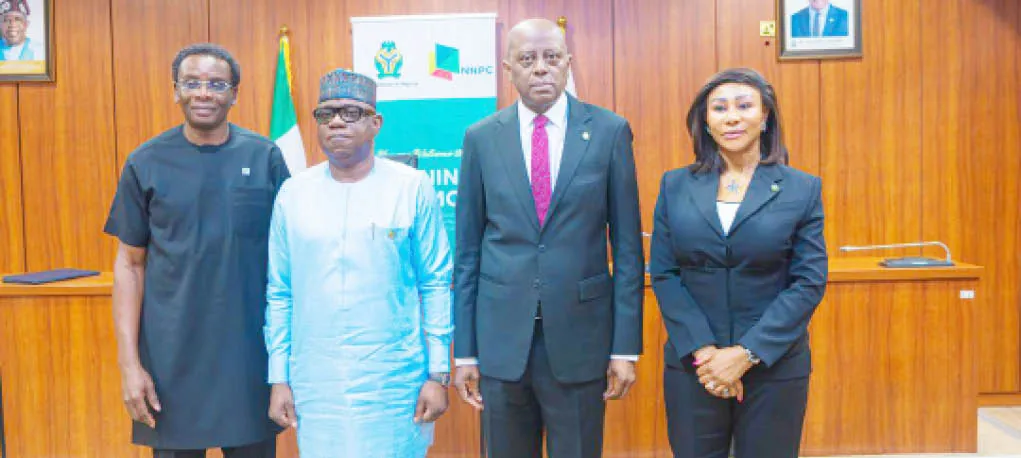
CBN, NNPCL sign pact on oil revenue oversight – Daily Trust
The Central Bank of Nigeria (CBN) and the Nigerian National Petroleum Company Limited (NNPCL) have signed a Memorandum of Understanding to drive oil revenue oversight.
Speaking at the event in Abuja on Tuesday, CBN governor, Olayemi Cardoso diclosed that the operations of the Nigerian National Petroleum Company Limited (NNPCL) were central to the country’s external reserves, fiscal revenue, and foreign exchange inflows.
He said the signing of the MoU marked a significant milestone in developing stronger macroeconomic management, adding that it would further the goals of providing enduring economic stability and sustainable prosperity for all Nigerians.
According to him, the CBN is the custodian of NNPCL’s key operational and foreign currency accounts.
He said the apex bank plays a critical role in ensuring the timely, secure, and transparent settlement of oil and gas proceeds into the federation account and other designated government accounts.
“Our continued collaboration in efficient account management, funds transfer, and liquidity support directly contributes to macroeconomic stability by ensuring availability of revenue to achieve fiscal mandates and predictable inflows to the foreign exchange markets.
“This is especially vital in times of volatility, where dependable flow of oil revenue supports monetary stability.
“As the financial system adapts to the global push for energy transition, CBN is well positioned to collaborate with NNPCL by exercising its convening power to attract global institutions with financial structures that can help develop Nigeria’s vast natural gas resources,” he said.
He said the MoU did not create a new relationship between the two institutions, adding that the two institutions have worked together for decades.
“This MoU provides a structured framework that will enable regular consultation, information exchange, and coordination in key areas.
“Such key areas include monetisation of proceeds of oil and gas assets to improve funding and liquidity for NNPCL operations.
“It will also help in expediting approvals and operational concessions necessary for NNPCL’s business operations, and payment, automation, and digital innovation with CBN and NNPCL treasury systems,” he said.
The CBN governor said the MoU would also enhance regulatory alignment by promoting a culture of disciplined compliance, ethical conduct, and sound risk management across all interfaces.
Cardoso said it would strengthen cyber security and operational resilience, with an emphasis on sharing customer-specific cyber threat alerts and information related to the financial, oil, gas and energy ecosystems.
Bayo Ojulari, the group chief executive officer of NNPCL, said signing the MoU meant Nigeria’s energy sector and its financial system were not separate stories.
According to Ojulari, crude oil and gas remain among the country’s most important sources of foreign exchange, with NNPCL designated as a national oil company.
“Following the Petroleum Industry Act (PIA), NNPCL became a limited liability company, a commercial entity accountable for performance and for adding value to our national hydrocarbon resource.
“A commercial national energy company needs a clear, structured relationship with the country’s monetary authority built on transparency rather than one of requests.
“This MoU provides that structure, setting out the principles and the framework by which our two institutions will collaborate at the meeting point between energy and finance.
“This is what you see in many nations that derive the best value from their hydrocarbons,” he said.
Ojulari said the anticipated collaboration would explore opportunities for economic growth and financial stability, helping NNPC align its initiatives in line with national monetary and energy objectives.
“It will explore credible opportunities to deepen and unlock any challenges to the enhancement of trade and foreign exchange, which will, in no small measure, support the flow of export proceeds into the Nigerian economy.
UPDATE NEWS:
Nigerians can now invest ₦2.5 million on premium domains and profit about ₦17-₦25 million. All earnings paid in US Dollars. Rather than wonder,
click here to find out how it works.