

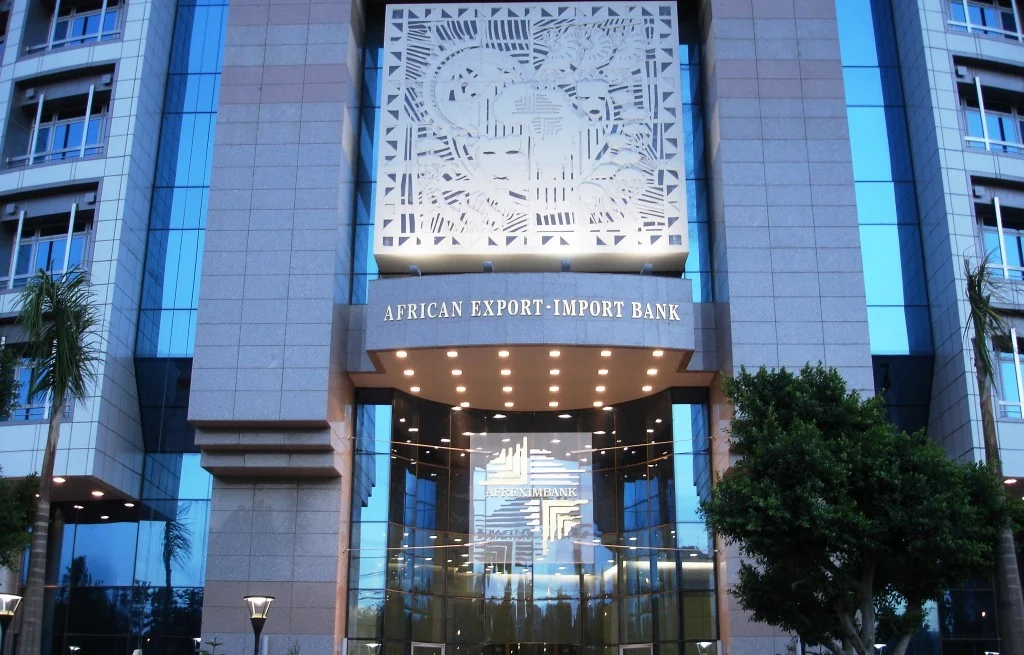
Afreximbank seeks more trade financing, stronger compliance to drive Africa’s industrialisation
The African Export-Import Bank (Afreximbank) has called for increased financing of intra-African trade, stronger regulatory compliance and greater investment in local production to accelerate economic integration and industrial transformation across the continent.
The bank said Africa must move beyond exporting raw materials to processing, manufacturing and adding value to its natural resources to create jobs, strengthen local industries and retain more wealth within the continent.
Executive Vice President, Global Trade Bank, Afreximbank, Haytham El Maayergi, made the call at the opening of the inaugural joint Afreximbank Trade Finance Seminar (ATFS) and Compliance Forum (ACF) in Gaborone, Botswana.
He said trade financing and effective compliance systems must work together to unlock the opportunities presented by the African Continental Free Trade Area (AfCFTA) and expand trade among African countries.
“We cannot build an integrated African market without financing the trade that connects us, and we cannot expand that trade sustainably without the trust, transparency and compliance systems that underpin it,” El Maayergi said.
He noted that geopolitical tensions and disruptions to global supply chains had exposed the risks of excessive dependence on distant markets, creating an opportunity for Africa to position itself as a major destination for global investment and production diversification.
According to him, Africa has the natural resources, land and human capital required to become a stronger participant in global trade, particularly as its population is projected to account for one in four people worldwide by 2050.
He, however, warned that the continent must take deliberate steps to turn its demographic advantage into economic prosperity.
“Whether this demographic advantage becomes an asset or a liability will depend on the decisions we make today,” he said, adding that Africa must increase trade among its countries and ensure such transactions are adequately financed and supported by credible compliance systems.
El Maayergi disclosed that although intra-African trade grew by 5.5 per cent in 2025, it accounted for only about 14 percent of the continent’s total trade.
He added that despite 50 countries ratifying the AfCFTA agreement, only 12 were actively trading under its framework, stressing the need to translate the agreement into practical economic benefits.
“We have opened the market. Our task now is to make that market work,” he said.
He called for a shift from exporting unprocessed commodities to developing industries capable of converting African resources into finished and intermediate products for local and regional markets.
Highlighting opportunities in Botswana, El Maayergi cited the country›s efforts to increase domestic participation in the diamond value chain, including the relocation of De Beers Group›s global rough-diamond sales activities from London to Gaborone.
He also referenced the Botswana Stock Exchange’s collaboration with the Nigerian Exchange Group and other African exchanges to expand cross-border investor participation in the Dangote Petroleum Refinery initial public offering.
Acting Chief Executive Officer of the Botswana Investment and Trade Centre (BITC), Anthony Sefako, said the country›s economic diversification agenda offered significant opportunities for trade financing, investment and regional value-chain development.
He said Botswana was pursuing a transition from dependence on diamond mining to a digitally enabled, export-driven and diversified high-income economy.
The country, he disclosed, was targeting an increase in manufacturing exports to 23 per cent by 2036, with investment opportunities in battery metal refining, pharmaceutical biomanufacturing, industrial steel, renewable energy and agricultural value chains.
Sefako said Botswana was commercialising viable industrial projects that required the trade financing and supply-chain liquidity instruments being discussed at the forum.
El Maayergi identified regional integration, value creation, confidence in African businesses and trust as four critical priorities for advancing the continent›s industrialisation agenda.
He highlighted Afreximbank›s Pan-African Payment and Settlement System (PAPSS), which facilitates cross-border transactions in local currencies across more than 30 African countries, as an important instrument for reducing barriers to intra-African trade.
He also cited the bank›s financing for mineral processing, its Strategic Minerals Development Programme and support for major African businesses, including the Dangote Group.
Another initiative, XTRA, Afreximbank’s trading platform for African trade confirmations, has facilitated more than $1.5 billion in transactions and helped develop a more liquid market for African trade-related risks, he said.
On compliance, El Maayergi stressed the need for effective regulatory and due diligence frameworks that facilitate legitimate trade rather than create unnecessary obstacles for businesses.
He said stronger compliance systems would help African banks maintain correspondent banking relationships, attract international capital and participate more confidently in global financial markets.
The two forums are also expected to examine how digitalisation, artificial intelligence and innovative financial instruments can improve trade efficiency, reduce transaction costs and strengthen risk management.
Afreximbank›s Africa Trade Gateway, which integrates its TRADAR trade information platform, MANSA due diligence and verification platform, African Trade Exchange (ATEX) and PAPSS payment system, was also highlighted as part of the bank›s efforts to strengthen Africa›s trade infrastructure.
WATCH TOP VIDEOS FROM NIGERIAN TRIBUNE TV