CAC, NiRA move to link business registration to free .ng domains, target dollar outflows
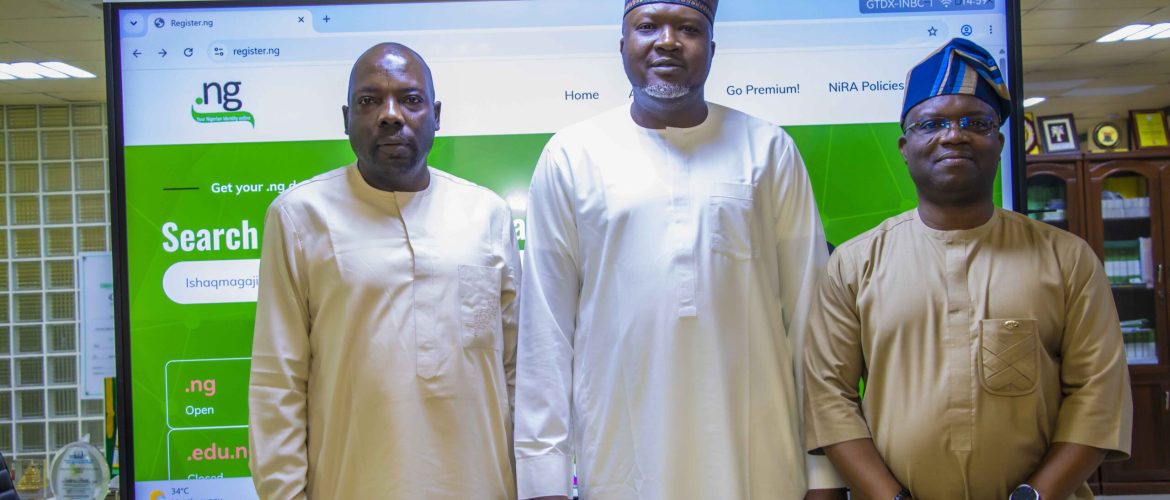
Nigeria is considering a plan to automatically offer newly registered businesses free .ng internet domain names, in a move aimed at reducing the country’s spending on foreign digital services, keeping business data within its borders and strengthening local online identity.
The proposal, being discussed by the Nigeria Internet Registration Association (NiRA) and the Corporate Affairs Commission (CAC), would allow businesses to secure an internet address corresponding to their registered names when they complete registration with the corporate registry.
If implemented, the initiative could reduce the number of Nigerian businesses paying annually in dollars to renew foreign domain names while encouraging more companies to adopt Nigeria’s country-code internet identity.
Read also: Nigeria making progress in food systems transformation – FAO Consultant, Faniran
Adesola Akinsanya, president of NiRA, disclosed the proposed partnership after a meeting with Hussaini Ishaq Magaji, registrar-general of CAC. He said the discussions were focused on giving Nigerian businesses a trusted online identity while retaining more digital economic value within the country.
“Many of these payments are made in dollars, so every renewal adds to demand for foreign exchange,” Akinsanya said.
He argued that although individual domain subscriptions may appear relatively inexpensive, the combined payments across thousands of businesses contribute to foreign exchange outflows.
The financial implications extend beyond domain registration. Nigerian businesses that use foreign domains and host their websites and email services abroad may also pay foreign providers for hosting and related digital services.
Akinsanya said keeping business data within Nigeria would also reduce exposure to foreign legal and regulatory jurisdictions, although adopting a .ng domain alone would not guarantee that a company’s website or data is hosted locally.
Nigeria’s low adoption of its country-code domain highlights the scale of the challenge facing the proposed initiative.
NiRA had more than 268,000 active .ng domains in October 2026, equivalent to approximately 996 domains per million people in a country with more than 242 million residents.
This compares with 1,962 country-code domains per million people in Kenya and 21,407 in South Africa. South Africa has about 1.4 million domains for a population of 65 million, giving it more than 21 times Nigeria’s adoption rate on a per-capita basis.
The difference suggests that Nigeria’s challenge is not simply getting businesses online but encouraging them to establish their digital identities under a Nigerian domain rather than relying on foreign extensions.
South Africa offers a model for the proposed intervention. Its company registry, the Companies and Intellectual Property Commission (CIPC), has operated a registration-linked domain offer with the .ZADNA registry since 2017.
NiRA recorded 98,285 .ng domain registrations in 2025 through 168 accredited registrars and more than 500 resellers. It also reduced .ng domain prices by about 40 percent in 2022 to encourage wider adoption.
Under the proposed Nigerian arrangement, the CAC registration portal would connect to accredited domain registrars through a shared domain management platform. This would allow a newly registered business to be linked to a registrar and offered a domain name corresponding to its registered business identity.
Akinsanya said the arrangement would make it easier for businesses to establish an online presence from the beginning rather than having to search for and purchase a domain independently.
He added that linking a .ng address to a CAC registration number could improve business identification and public trust.
However, the success of the proposal will depend on more than offering free domain names. Businesses must also be willing to use them, renew them and adopt local hosting and digital infrastructure where appropriate.
The arrangement could also introduce a new compliance dimension to business registration.
Magaji said the partnership presented an opportunity for CAC to explore enforcing annual corporate filings alongside annual domain renewals.
This could create a closer relationship between a company’s legal registration and its digital identity, although the details of how the two renewal processes would be linked have not been disclosed.
For businesses, the proposal raises questions about whether the free domain would remain available beyond the initial registration period, who would bear renewal costs and whether companies would be free to retain existing foreign domains.
The distinction is important because a free first-year domain would not necessarily eliminate the recurring dollar payments that NiRA wants to reduce. Its long-term impact would depend on renewal pricing, ease of use and the availability of reliable local hosting services.
The discussions form part of broader efforts to strengthen Nigeria’s domestic internet infrastructure. The National Information Technology Development Agency approved NiRA’s 2026 expansion plan to increase .ng adoption, while the association securely signed the .ng registry zone with DNSSEC in February 2026 to strengthen domain security.
In April 2026, NiRA also called for an executive order requiring .ng domains for government communications, public institutions and official digital engagements.
The association and CAC are expected to meet again before the end of 2026, with plans to sign a memorandum of understanding and begin a six-month pilot covering business-name registrations.
The pilot is expected to test how the proposed system works before a wider rollout.
If successful, the initiative could turn business registration into an entry point for local digital identity, giving more Nigerian enterprises a recognised online address while creating opportunities for domestic domain registrars and hosting providers.

Royal Ibeh is a senior journalist with years of experience reporting on Nigeria’s technology and health sectors. She currently covers the Technology and Health beats for BusinessDay newspaper, where she writes in-depth stories on digital innovation, telecom infrastructure, healthcare systems, and public health policies.