Nigeria ratifies UN treaty for global maritime opportunities
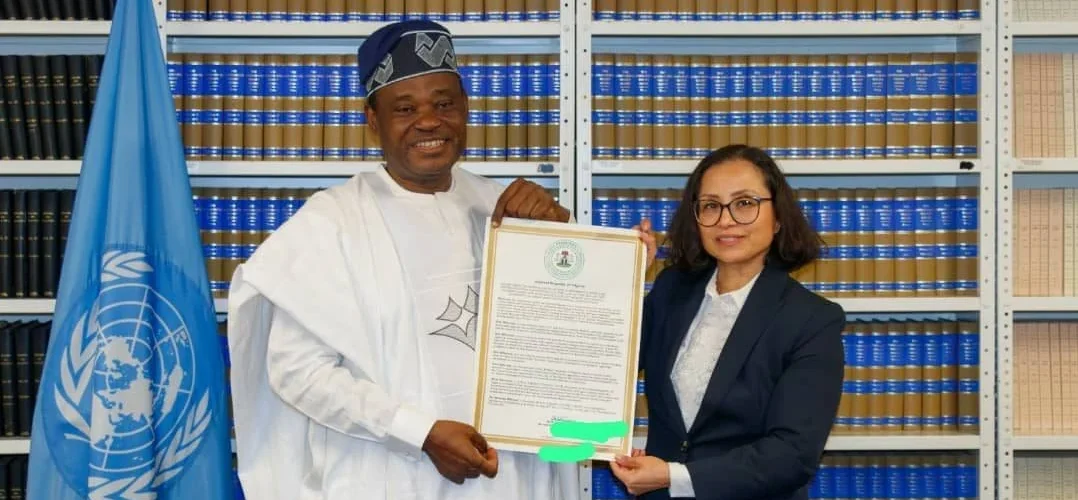
Nigeria has ratified the United Nations Agreement on the conservation and sustainable use of marine biological diversity in areas beyond national jurisdiction, a move expected to strengthen the country’s participation in global ocean governance and open new opportunities in the blue economy.
The country’s Permanent Representative to the United Nations, Ambassador Jimoh Ibrahim, disclosed this on Tuesday during the deposit of Nigeria’s instrument of ratification at the United Nations Headquarters in New York.
The agreement, known as the Biodiversity Beyond National Jurisdiction (BBNJ) Agreement, provides an international framework for the conservation and sustainable use of marine biodiversity in areas beyond national jurisdiction.
Speaking at the ceremony, Ibrahim said Nigeria’s participation would strengthen its engagement in decisions concerning marine genetic resources, equitable benefit-sharing and the sustainable management of ocean resources.
He said Nigeria, as a coastal country bordering the Gulf of Guinea, depended on fisheries, shipping and other ocean-related activities for the livelihoods of millions of its citizens.
Ibrahim said the administration of President Bola Tinubu had demonstrated its commitment to developing the maritime sector through the establishment of the Federal Ministry of Marine and Blue Economy, adoption of a National Blue Economy Policy and development of a roadmap for implementing the agreement.
ALSO READ: Oyo: Alli won’t ‘use and dump’ those who work for him — Aide
He added that Nigeria was working with other West African countries on a proposal for a highly protected marine area on the high seas.
In a statement issued by the United Nations Mission House in New York, the Nigerian envoy said the country would, as a party to the agreement, continue to advocate the equitable sharing of benefits from marine genetic resources and digital sequence information.
He also stressed the need for capacity-building, transfer of marine technology to African and other developing countries, and the establishment of a Special Fund with adequate and predictable resources to support the implementation of the agreement.
According to him, Nigeria’s ratification would strengthen its participation in international decisions on marine biodiversity and provide a platform for advancing its interests in the emerging global ocean economy.
The agreement does not automatically expand Nigeria’s territorial waters or geographical boundaries but provides a framework for countries to participate in the conservation and sustainable use of marine resources beyond their national jurisdiction.
Ibrahim urged countries that had yet to ratify the agreement, particularly African nations, to do so, adding that Nigeria would work with the African Group towards a successful first Conference of the Parties.
WATCH TOP VIDEOS FROM NIGERIAN TRIBUNE TV