Bayelsa boat mishap exposes gaps between safety interventions, enforcement
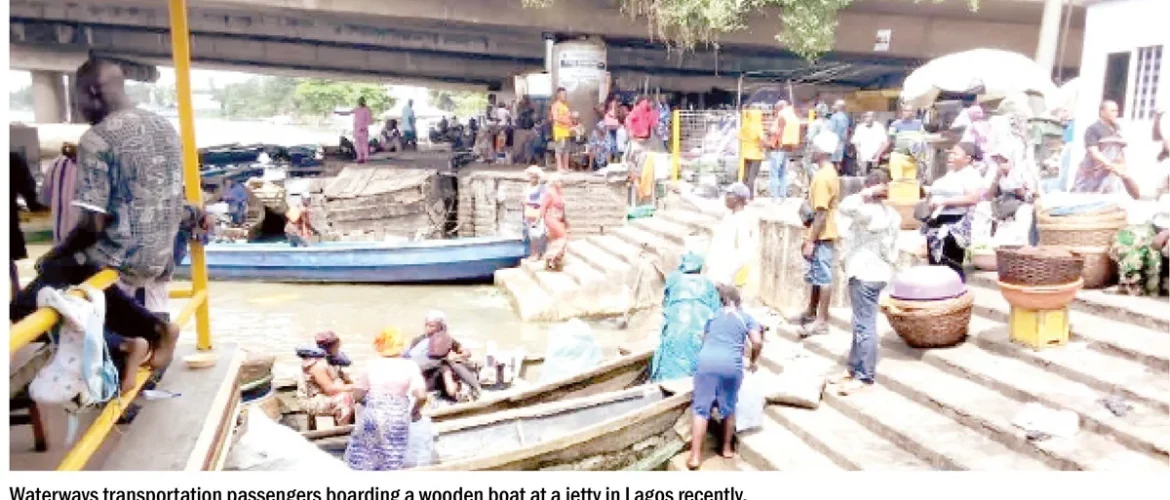
On November 20, a wooden passenger boat conveying mourners from Ayama to Ukubie for a burial ceremony capsized near the river junction between Oweikorogha and Otuan communities, in Southern Ijaw Local Government Area of Bayelsa State, raising questions over enforcement lapses on Nigerian brown waters, writes TOLA ADENUBI.
Another boat mishap, another community in mourning, another list of lives lost on our waterways, leaving families devastated and communities in grief.
The National Emergency Management Agency (NEMA) confirmed that 24 people died in a boat crash in Bayelsa State, last Friday, while another 24 were rescued. However, other reports put the death toll at 29.
What really happened in Bayelsa?
Preliminary findings announced by Bayelsa State governor, Senator Douye Diri, indicated that the boat was overloaded; no passenger manifest was available, and most of the passengers were not wearing life jackets.
These revelations are deeply troubling. Overloading, absence of a passenger manifest, failure to wear life jackets.
According to stakeholders in the maritime sectors, these are serious safety concerns that must be thoroughly investigated.
The tragedy raises fundamental questions about compliance with established water transportation safety regulations and the effectiveness of enforcement at departure points.
Governor Diri also confirmed that neither the passengers nor the boat operator wore life jackets. This is particularly unfortunate, given the Federal Government’s previous interventions to improve safety awareness and provide life-saving equipment to water transport users in Bayelsa and other riverine communities.
FG’s previous intervention
For the sake of accuracy, it is important to acknowledge the interventions already undertaken by the Federal Government to address boat Mishaps across the country.
On May 2, 2025, Minister of Marine and Blue Economy, Dr Adegboyega Oyetola, personally visited Bayelsa to distribute 3,500 life jackets to water transport users as part of efforts to promote safety and protect lives on inland waterways. This was part of a broader nationwide campaign across the 28 littoral states, aimed at encouraging compliance with safety regulations and reducing avoidable deaths.
Following the latest Bayelsa tragedy, the minister promptly ordered an investigation into the immediate and remote causes, directing the National Inland Waterways Authority (NIWA) to conduct a thorough investigation and submit its findings. He also instructed NIWA to collaborate with relevant government agencies and the Bayelsa State government to ensure a comprehensive, transparent and credible investigation. The minister expressed concern over the reported absence of a passenger manifest, emphasising that proper passenger documentation remains a critical safety requirement that must be strictly enforced.
These interventions demonstrate that the Federal Government recognises the dangers confronting inland water transportation and has taken steps to address them. However, the Bayelsa incident underscores the need to translate policy interventions into consistent compliance and effective enforcement at the grassroots.
From Bola Oyebamiji to Yusuf Girei
The National Inland Waterways Authority has continued to play a central role in the Federal Government’s efforts to improve safety standards, eliminate substandard vessels and promote responsible operations across Nigeria’s inland waterways.
Under the leadership of the former Managing Director, Bola Oyebamiji, water transportation safety received renewed attention through stakeholder engagement, regulatory advocacy and efforts to strengthen operational procedures at jetties across the country.
Appointed in October 2023, Oyebamiji was given the responsibility of driving the implementation of the National Inland Waterways Transportation Code to reduce boat accidents and standardise water transportation operations.
During his tenure, reported fatalities on the waterways declined from 330 in 2022 to 92 in the first eight months of 2025. This represented significant progress, although sustaining and improving on the gains requires continuous commitment from regulators, operators and passengers.
Oyebamiji also encouraged a nationwide engagement initiative involving the Coalition of Maritime Journalists of Nigeria, particularly in states such as Niger, to investigate the socio-cultural factors contributing to boat mishaps and identify practical solutions. The engagements examined the roles of traditional institutions and community leaders in influencing public attitudes towards water safety.
The positive outcomes reported from the engagements in Niger State, including improved community support for safety measures, demonstrated the importance of combining public enlightenment with traditional institutions and regulatory enforcement.
The lesson is clear: when communities understand and embrace safety regulations, when traditional rulers lend their voices to compliance, and when regulators enforce the rules, the risk of accidents can be significantly reduced.
In a further demonstration of its commitment to addressing boat mishaps, the Ministry of Marine and Blue Economy inaugurated a Special Committee on the Prevention of Boat Mishaps in Nigeria, chaired by former NIWA Managing Director, Oyebamiji.
The committee, inaugurated on February 27, 2025, included representatives of the Association of Tourist Boat Operators and Water Transporters of Nigeria (ATBOWATON), led by Dr. Gani Tarzan Balogun, and the Waterways Boat Operators and Transporters Association of Nigeria (WABOTAN), led by Tope Fajemirokun.
It was mandated to undertake a comprehensive review of commercial boat operations, identify the underlying causes of boat mishaps and recommend sustainable solutions.
The committee produced a six-chapter report containing 64 recommendations, with 17 key proposals highlighted.
Among its recommendations were the establishment of a Coastal Guard to enforce waterway safety regulations; development of a National Boat Design Policy to standardise permitted vessel types; mandatory certification and formal training for boat operators; increased funding for NIWA to strengthen its hydrographic and marine engineering functions, and the establishment of search and rescue stations at strategic locations across inland waterways.
Beyond the committee’s work, Oyetola also approved a nationwide distribution of life jackets to riverine and coastal communities.
NIWA has reportedly distributed 42,000 life jackets across states, including Bayelsa, Anambra, Akwa Ibom and Ogun, while the Minister has been acknowledged for distributing 45,000 life jackets across 12 states.
Other interventions included the deployment of more than 1,500 navigational buoys in parts of River Niger, the introduction of a Water Transportation Code to sanction offenders, an increase in the number of water marshals responsible for enforcing safety regulations, and the clearance of water hyacinths in Omu Creeks, Lekki and Ikorodu in Lagos State.
NIWA has also taken enforcement action against operators, whose negligence resulted in fatalities. In Kogi State, two boat operators were prosecuted over the death of 19 passengers, following their failure to heed warnings against night journeys and travelling without life jackets.
These initiatives are commendable. However, the Bayelsa incident reminds us that the existence of safety policies and interventions must be matched by strict compliance and sustained enforcement.
Acting Managing Director of NIWA, Yusuf Girei, is expected to sustain the momentum of the Federal Government’s drive to eliminate avoidable deaths on Nigeria’s inland waterways.
Following the Bayelsa tragedy, Girei also dispatched a high-powered delegation to the state at the directive of the Minister of Marine and Blue Economy.
These actions are welcome and should be complemented by sustained monitoring, stronger enforcement and community engagement, particularly in riverine areas where water transportation remains an essential means of mobility.
Conclusion
It would be unfair to conclude that the Federal Government has done nothing because another tragedy has occurred in Bayelsa. Equally, it would be wrong to suggest that the provision of life jackets and the issuance of safety directives automatically absolve regulatory authorities of responsibility.
Government has a duty to provide the necessary safety infrastructure, strengthen regulation and ensure effective enforcement. Passengers and operators also have a responsibility to comply with the rules.
Providing life jackets is important but ensuring that they are worn is equally critical. Issuing warnings is necessary, but enforcing those warnings is indispensable.
The Bayelsa tragedy must therefore lead to a comprehensive examination of the conduct of the boat operator, the circumstances surrounding the mechanical failure, the reported overloading, the absence of a passenger manifest and the effectiveness of safety checks at the point of departure.
WATCH TOP VIDEOS FROM NIGERIAN TRIBUNE TV