IGEN Calls for Stronger Climate Education Policies, Sustainable Financing Across Africa – THISDAYLIVE
Follow THISDAYLIVE on GoogleAdd us as a preferred source to see more of our stories in Google
Michael Olugbode in Abuja
The Institute for Greening Education in Nigeria (IGEN) has stressed the need to translate the growing recognition of education as a critical component of climate action into stronger national policies, institutional commitments and practical implementation across Africa.
The institute said this would require stronger international commitment, sustainable financing and coordinated continental action to address climate change challenges through education.
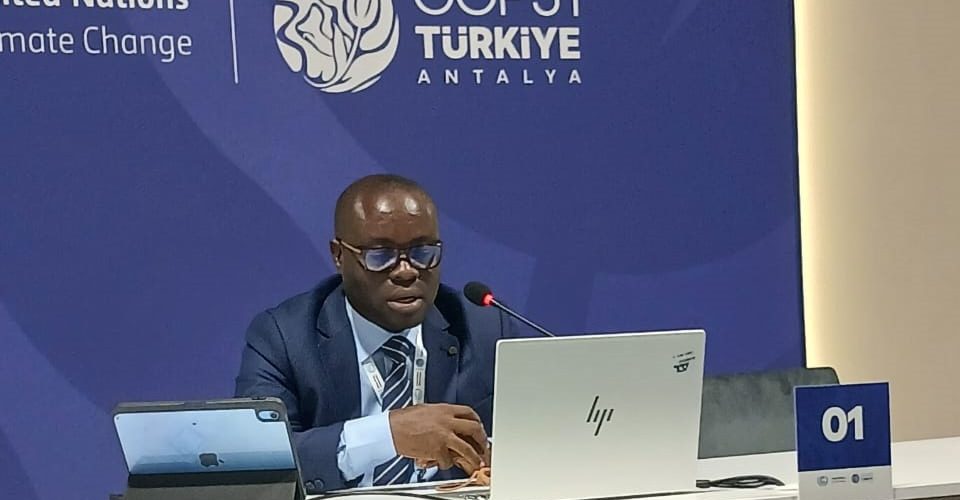
Its Executive Secretary, Mr. Unyime Robinson, made the call in a statement issued on Tuesday in Abuja, following the conclusion of the 31st United Nations Climate Change Conference (COP31) in Antalya, Türkiye.
Robinson said although the conference ended without consensus on its proposed overarching outcome, it recorded progress in discussions on climate adaptation, financing and just transition.
He urged African countries to move beyond participation in global climate discussions and translate their commitments into concrete actions that would strengthen climate education.
IGEN disclosed that it participated in several international engagements at COP31, where it presented its State of Greening Education in Nigeria Report.
The report highlighted Nigeria’s emerging institutional framework for integrating climate change education and environmental sustainability into the country’s education system.
The institute also engaged international education and development stakeholders on professional capacity development, curriculum transformation, green skills and climate-resilient schools.
IGEN reaffirmed the importance of UNESCO’s Greening Education Partnership, of which it is a member, particularly its four priority areas of greening schools, curricula, teacher training and communities.
It also emphasised the need to strengthen teacher leadership, youth participation, monitoring and accountability in implementing greening education initiatives.
On Nigeria’s efforts, the institute identified the National Greening Schools Programme (NGSP), supported by the Universal Basic Education Commission (UBEC), as an important platform for advancing climate education through the Greening Schools and Climate Change Education Intervention (GSCCEI).
Looking ahead to COP32, scheduled to hold in Addis Ababa, Ethiopia, in November 2027, the institute called on African countries to develop coordinated continental policies addressing the peculiar challenges of their education systems and vulnerability to climate change.
It pledged to sustain collaboration with national education institutions, development partners and other stakeholders towards advancing a continental agenda for greening education and climate literacy.
IGEN also reaffirmed its commitment to professional standards, research, teacher development, green skills, policy innovation and partnerships to transform education systems in Nigeria and across Africa.
The institute maintained that education should no longer be treated as peripheral to climate action but recognised as a strategic foundation for climate resilience, sustainable development and Africa’s green economic transition.