At Neo-Awoism roundtable, Nigerian politicians, experts examine Awolowo’s philosophy for productive federation
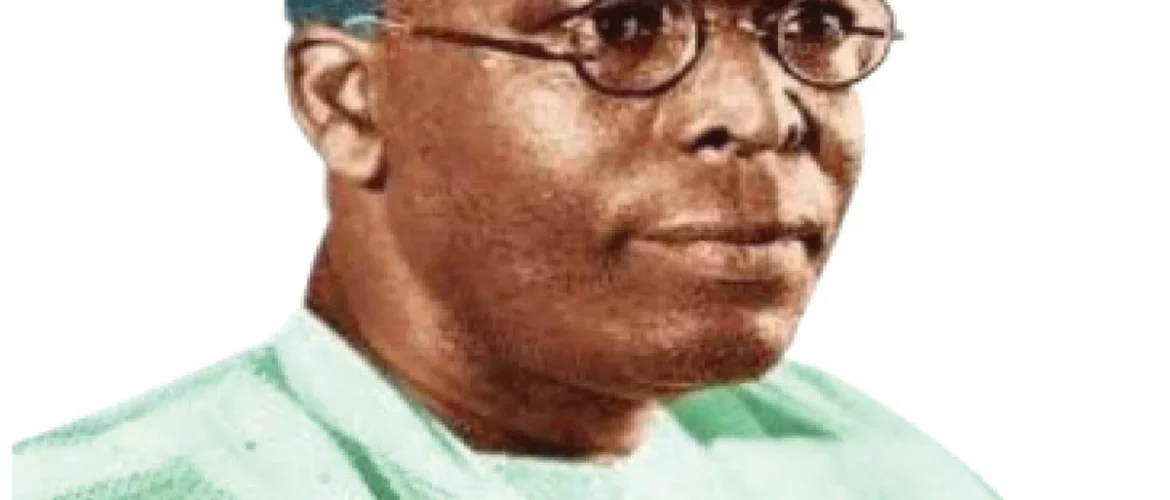
NIGERIAN politicians, economists, academics and media practitioners have examined how the developmental philosophy of Chief Obafemi Awolowo can be reinterpreted for 21st-century Nigeria at a virtual roundtable tagged ‘Neo-Awoism: A 21st Century Nigerian Economic Development Doctrine’.
The meeting, convened by the Obafemi Awolowo Foundation and moderated by Prof. Seun Kolade, was attended by about 150 participants from different partof the world.
Some of those who attended include former governors Ibikunle Amosun, Kayode Fayemi and Olusegun Mimiko; Professor Oyebanji Oyelaran-Oyeyinka; Prof. O. Ogbu; Dr Olusola Oni; Bamitale Omole; Senator Sola Adeyeye; Pastor Tunde Bakare; Archbishop Michael Fape; Mr Martins Oloja; and other experienced politicians, economic experts, veteran journalists and media practitioners.
In her opening remarks, the Executive Director of the Obafemi Awolowo Foundation, Ambassador Dr Olatokunbo Awolowo Dosumu, said the Foundation was established, among other things, to promote socially edifying interaction between policy and scholarship.
“The Obafemi Awolowo Foundation was established, among other things, to promote a socially edifying interaction between policy and scholarship.
One of its core mandates is to provide a forum for frequent and fruitful interaction between policy makers, reputable academics, and the general public so that each party will be enriched and public policy upgraded,” she said.
“Convening this roundtable, therefore, is not incidental to the Foundation’s work. It is actually a direct expression of its founding mandate.”
Ambassador Awolowo Dosumu welcomed participants and thanked the author and originator of the New-Awoism concept, Mr Tilewa Adebajo, for subjecting his proposition to independent scrutiny.
She described Awolowo as a profound thinker whose political philosophy was not merely an abstract intellectual exercise but was rooted in a deep concern for the welfare of the people and a conviction that government must be purposeful, disciplined and accountable.
However, she cautioned that Awolowo was also a man of his time. She said the challenge was not to recreate that era but to identify the principles underlying his philosophy and consider how they could be reinterpreted and applied in a world profoundly transformed by technology, globalisation and new economic realities.
She outlined five broad questions to guide the deliberations:
“First, which elements of Chief Awolowo’s developmental philosophy remain relevant to contemporary Nigeria, and how might they be appropriately reinterpreted? Second, does New-Awoism, as presently conceived, offer the framework required to address Nigeria’s current political, economic, and social challenges? Third, how might its principles be translated into practical policies in such critical areas as education, healthcare, fiscal policy, economic productivity, technological advancement, and institutional reform? Fourth, what gaps, contradictions, or limitations in the proposed framework require further investigation or refinement?
And finally, how might the concept be brought to the attention of relevant public institutions, policymakers, and development agencies for consideration and possible action?”
Awolowo Dosumu urged participants to remain focused on interrogating the proposition rather than allowing the discussion to expand into a general examination of Nigeria’s numerous problems.
“Our task today is to interrogate a particular proposition and determine whether and how it might be developed into something of practical value,” she said.
She concluded that, “In adapting the means, we must not lose the ends, whatever we choose to call it, the true measure of any contemporary reinterpretation of Awolowo’s philosophy must show its capacity to advance welfare.”
Adebajo: Nigeria has lost value while peers moved ahead
In his keynote presentation, Mr Tilewa Adebayo said the idea had been on his mind for a long time, driven by questions about why Nigeria, despite its resources, was still discussing reform and stabilisation instead of delivering quantifiable growth.
“As we go through another election cycle, one begins to ask questions about: why are we where we are, and why are we still looking at trying to reform or trying to stabilise instead of delivering quantifiable growth?” He asked.
Adebajo said nostalgia for his childhood, including memories of the University of Ibadan and Premier Hotel, prompted him to research how the Western Region developed its development plan.
He noted that in the 1950s, Nigeria was at par with countries such as Brazil and South Korea, while Singapore, Malaysia and Indonesia were still playing catch-up. However, he said those countries pulled far ahead between the 1970s and 1990s.
“In 25 years ago, Indonesia had the same GDP as Nigeria. In 2016, they hit $1trillion GDP, and today they are at $1.4 trillion. Within that same period, Nigeria’sGDP has moved up to about$750 billion, and today stands somewhere around$300 billion. So we’ve actually lost value,” Adebayo said.
He attributed the Western Region’s achievements to a clear development plan.
The first development plan, covering 1955 to 1960, cost£100 million, while the second, covering 1960 to 1965, cost £165 million. According to him, the combined cost of the two plans would amount to about $7.5 billion in today’s money.
“What our founding fathers in the Western Region did within that 10-year period cost them $7.5 billion. And if you want to take a look at the value which they delivered, it is quite staggering,” he said.
He listed several institutions and initiatives established under Awolowo, including the Western Region Finance Corporation in 1955, which he described as the predecessor of a sovereign wealth fund and today’s Odu’a Investment; the Western Nigeria Marketing Board; free primary education; Ikeja Industrial Estate; farm settlements; the Western Nigeria Development Corporation; University of Ife; Cocoa House; Premier Hotel; and WNTV.
“But what we’re trying to say is that there was a plan.
And this plan focused not only on what government would do and what government’s role would be,” Adebajo said. He also cited Awolowo’s management of the economy during the civil war without borrowing, describing it as an incredible feat driven by frugality and financial prudence.
Adebajo said Nigeria currently lacked a development philosophy, with successiveadministrations introducingtheir own agendas while peer countries continued to consolidate their development gains.
He argued that New-Awoism was neither socialism nor laissez-faire capitalism.
“What we’re saying is that New-Awoism is not socialism. It’s a free enterprise, private sector-leddoctrine. And it’s also notlaissez-faire capitalism where everybody goes and does what you want. The state has to have a deliberate role in human development, strategic infrastructure, regulation, and creating a strong legal and regulatory framework,” he said.
He summarised the vision as building a strong Nigeria through capable citizens, productive regions and disciplined institutions, with the private sector leading the economy.
He warned that fiscal irresponsibility remained a major problem, alleging that Nigerian government was currently violating the Fiscal Responsibility Act.
He added that borrowing had reached alarming levels and that first-quarter budget performance showed that only about 50 percent of revenue and expenditure targets had been met.
Adebajo concluded by outlining the 10 pillars of Neo-Awoism: “Number one: human capital before physical capital. Competitive federalism. Productive private sector-led economy.
Strong legal and regulatory framework. A state as a strategist, regulator, and provider of public goods.
Fiscal discipline: borrow to build, tax to govern, and invest to transform. Social democracy without fiscal irresponsibility. Regional integration: Nigeria, ECOWAS, and the African Continental Free Trade Area. Infrastructure and productive capital.
A meritocratic governance and intergenerational responsibility.”
In his intervention, Prof. O. Ogbu, a prominent economic policy expert, said the presenter meant well but argued that the philosophy required deeper articulation.
“Pa Awo was basically concerned with social justice, inclusion, concern for inequality. And so, you have to see his pursuit of access to education in those lights,” Ogbu said.
He warned against attempting to strike a balance between the market and the state, arguing that, at Nigeria’s current stage of development, the activist state should take precedence over the market because the market is an allocative mechanism rather than a developmental philosophy.
Ogbu added that getting the economy right would be difficult without first getting politics right.
Mr Remi Oyekanmi, aUS-based Nigerian investigative journalist, columnist, poet and public affairs analyst, commended Adebajo’s work but focused on the need for a strong legal framework and discipline.
“Everything all of us are discussing, everything, man is the centre of Chief Awolowo’s philosophy. No matter what we do, education, health, economy, everything has to define the dignity of man,” Oyekanmi said.
“Moving from classical Awolowoism to neo-Awoism is just the development of a framework to apply the philosophies to engender the progress that we want, to develop man. And if we do that, then the society will bring the progress.”
Former Governor of Ondo State, Dr Olusegun Mimiko, thanked Ambassador Awolowo Dosumu for keeping Awolowo’s legacy alive but questioned the use of the term “neo-Awoism”.
“The more I listened, the more I wondered why he used the term ‘new Awoism.’ The very essence of his presentation has been, apart from the fact that he did not dwell on the political content of Awoism, everything he has said about the economic paradigm of the so-called new Awoism represents the very essence of Awoism itself,” Mimiko said.
He highlighted the lengthy leadership tenures of key figures in comparator countries, citing Lee Kuan Yew in Singapore, who led for 31years; Suharto in Indonesia, for 31 years; Mahathir in Malaysia, for 22 years; andPark in South Korea, for 18years. He contrasted these periods with Nigeria’s four-year presidential cycles.
“In Nigeria, we never had that foundational leadership period, and even now with our four-four years experience in presidentialism, the question is: can we really, leveraging on this centralized, short-term political arrangement, bring about the development that Awolowo started in Western Region?” Mimiko asked.
Similarly, former Governor of Ogun State, Ibikunle Amosun, thanked Awolowo Dosumu for keeping the flag flying and argued thatNigeria’s problem was not a lack of ideas but a lack of leadership.
“For me, it will not just matter, Nigeria is not bereft of ideas. We have all these wonderful ideas. Until we get good leaders, all the things that we are talking about will continue to be the same. I think it is all about leadership,” Amosun said.
WATCH TOP VIDEOS FROM NIGERIAN TRIBUNE TV