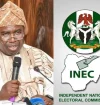
2027: Expert Raises Concern Over Poor Awareness Of INEC Mock Accreditation

A former Media Manager of the Transition Monitoring Group (TMG), Armsfree Ajanaku, has faulted the Independent National Electoral Commission (INEC) over what he described as inadequate collaboration with civil society organisations to sensitise voters ahead of its mock accreditation exercise.
Ajanaku said the exercise was an important opportunity for INEC to test its preparedness for the 2027 general elections, particularly its logistics, voter accreditation technology and result transmission processes.
Speaking with LEADERSHIP television on Saturday, he said the mock accreditation was being conducted in 17,676 polling units across the country, representing roughly 10 per cent of Nigeria’s polling units.
He explained that the exercise was designed to test the commission’s electoral processes under conditions similar to those expected on election day.
According to him, civil society organisations would be monitoring when INEC officials arrived at polling units, the effectiveness of the logistics arrangements, voter turnout and the functionality of the Bimodal Voter Accreditation System (BVAS).
Ajanaku, however, expressed concern that INEC had not done enough to work with civil society organisations to create awareness in communities where the exercise was taking place.
“We did not see enough synergy with civil society organisations to raise awareness in those specific polling units where the mock accreditation will be taking place,” he said.
He predicted that voter awareness in some locations would largely depend on residents noticing INEC officials at polling units and subsequently turning out to participate.
Mock Accreditation Open To Registered Voters
Clarifying who could participate in the exercise, Ajanaku said it was open to members of the public who were registered voters in the selected polling units.
He said there was no special selection of voters, explaining that the same accreditation process expected on election day would be followed during the mock exercise.
He urged residents in the affected polling units to take an interest in the exercise and participate, describing it as an opportunity to assess the electoral process before the main elections.
BVAS, Result Transmission, Logistics Under Test
Ajanaku said the exercise would assess several components of the electoral process, including the functionality of BVAS, deployment of election materials, reverse logistics, ballot secrecy and the uploading of results to INEC’s Result Viewing Portal (IReV).
He stressed that BVAS remained critical to the credibility of elections, noting that voters must undergo the prescribed accreditation process before casting their ballots.
“If you do not get through the BVAS, then, of course, if you go ahead to vote, that vote is an illegal vote and it cannot stand,” he said.
He added that the exercise would also test the entire chain of election-day operations, from the deployment of personnel and materials to voter accreditation, voting and result transmission.
On security, Ajanaku recalled that the INEC chairman had previously called on security agencies to ensure adequate deployment of personnel during the elections.
He said security coordination was another important factor in determining the success of the electoral process.
We’ve got the edge. Get real-time reports, breaking scoops, and exclusive angles delivered straight to your phone. Don’t settle for stale news. Join LEADERSHIP NEWS on WhatsApp for 24/7 updates →