970m Africans lack access to clean cooking — Energy expert
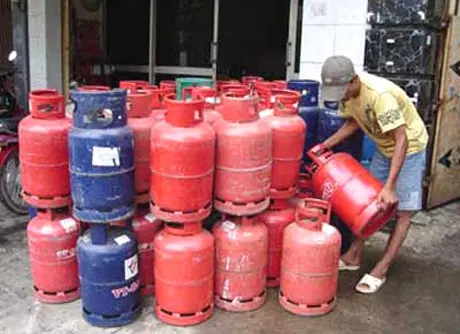
File image.
By Ediri Ejoh & Henry Obetta
About 970 million Africans lack access to clean cooking, while over 560 million people in sub-Saharan Africa are without electricity, energy experts have said, calling for greater continental collaboration to tackle the crisis.
Regional Chair for Africa of the World Energy Council, Mr Omar Farouk, disclosed this at the 14th anniversary lecture and investiture into the Realnews Hall of Fame, organised by Realnews Magazine, with the theme: “Geopolitical Turbulence and Energy Security: Forging Strategic Opportunities for Africa.”
Citing the 2026 Tracking SDG 7 Report, based on 2024 data, Farouk lamented Africa’s energy poverty despite its abundant oil, gas and renewable resources.
“How can a continent so richly endowed with energy resources remain so energy poor? Why do petroleum-producing countries sometimes struggle to supply affordable fuels to their own citizens? Why do countries with natural gas resources suffer from electricity shortages?” he asked.
He attributed the crisis largely to inadequate finance, technology and infrastructure, rather than resource scarcity.
“We cannot, as a continent, be able to get out of where we have found ourselves today if we continue to operate in silos. Our solution lies in cooperation and collaboration,” he said.
Farouk stressed that finance, technology and infrastructure must work together to drive energy development, adding: “You can have a lot of money without the technology, you can’t make any progress. You can bring scientists, technologists, without the money, they can’t make progress. And you can have both of these without the energy infrastructure, you can’t move energy from one point to the other.”
He said Africa was projected to attract only $110 billion, or 3.3 per cent of the estimated $3.4 trillion global energy investment in 2026, while universal clean cooking access would require about $4 billion annually.
Managing Director of Frazimex Engineering Limited, a subsidiary of Oilserv Group, Engr. Chuka Eze, urged African countries to leverage global geopolitical disruptions to strengthen energy sovereignty and industrial capacity.
He said Africa captures less than one per cent of the value generated from clean-energy technology manufacturing, despite its rich mineral resources.
“Africa’s opportunity is to move from being a supplier of strategic resources to becoming a shaper of the global energy system,” Eze said.
He called for stronger local-content policies, technology transfer, skills development and regional cooperation to promote domestic processing, manufacturing and industrial growth.