

Why BUA Cement, Dangote Cement, MTN, six others have free floats below 20% and still trading
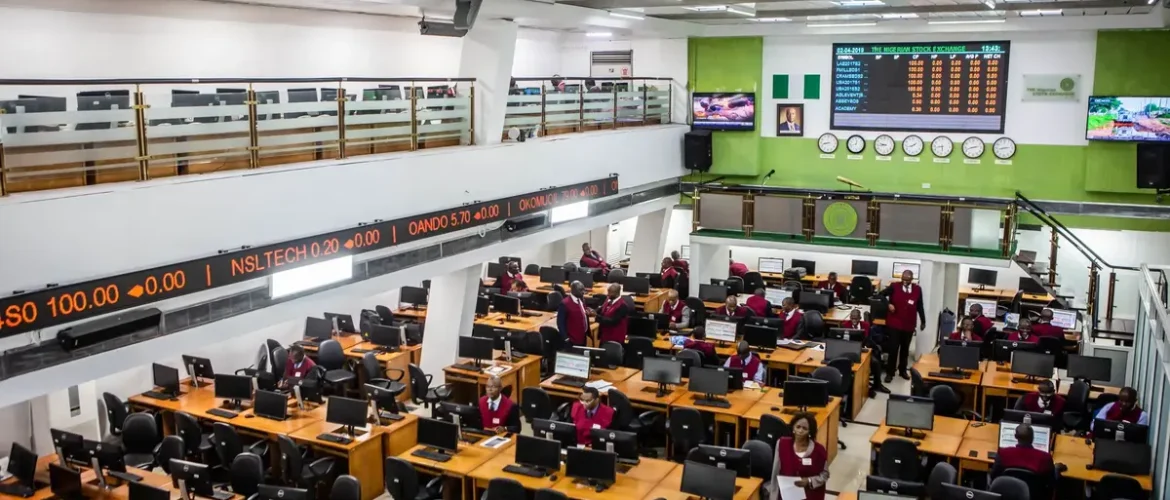
Nine companies in the NGX 30 Index have less than 20% of their shares in the hands of the investing public, with the bulk held by major shareholders, founders, and other strategic investors.
The companies are BUA Cement, International Breweries, BUA Foods, Dangote Cement, Transcorp Hotels, HBM Nigeria, Transcorp Power, Geregu Power and MTN Nigeria.
An analysis of shareholding disclosures and October 2026 market prices shows that BUA Cement has the smallest proportion of shares in public hands, at 2.32%, while MTN Nigeria has the highest among the nine, at 18.92%.
At the other end, some banks have nearly all their shares classified as publicly held. GTCO leads with an estimated free float of 99.90%, followed by Fidelity Bank at 99.26% and FCMB Group at 97.98%. Access Holdings and Zenith Bank also have relatively high free floats of 84.93% and 84.96%, respectively.
But having less than 20% of shares in public hands does not automatically mean these companies have broken the Exchange’s rules. Nevertheless, the proportion of shares held by the public matters because it can influence trading liquidity, how easily investors can buy or sell shares, and how market prices are determined.
Under Rule 1.1.1 of the NGX Rules Governing Free Float Requirements, companies on the Premium Board can meet the requirement by having either 20% of their shares in public hands or publicly held shares valued at N40 billion or more.
Similarly, Rule 1.1.2 allows Main Board companies to qualify through 20% public shareholding, held by at least 300 shareholders, or publicly held shares valued at N20 billion or more.
The analysis further shows that as of the close of trading in October 2026, the 30 companies had a combined market value of N155.25 trillion, accounting for about 94% of the Nigerian equity market, valued at N165.11 trillion.
However, only N42.12 trillion, representing 27.13%, was classified as publicly held equity.
In other words, for every N100 worth of shares in these companies, only about N27 was classified as being in public hands, while the remaining N73 was largely held by major shareholders and strategic investors.
The distinction matters because one of the NGX’s objectives in setting minimum free-float requirements is to support an orderly and liquid market where investors can readily buy and sell shares.
Yet the monetary alternative allows companies to qualify without necessarily increasing the proportion of shares held by the public.
BUA Cement provides an example. Although just 2.32% of its shares are classified as publicly held, they were worth approximately N230.51 billion at October prices, comfortably above the N40 billion requirement.
The company therefore appears to meet the applicable monetary threshold, but that does not necessarily mean its ownership is becoming more widely distributed.
The broader question is whether the existing framework sufficiently encourages wider public participation and the trading activity needed to deepen Nigeria’s equity market.
Does the free-float rule deepen the market?
A growing stock market is not necessarily the same as a market with broader public ownership.
- A company’s market value can rise substantially as its share price increases, even when the number of shares held by public investors remains unchanged.
- This means a company qualifying through the N20 billion or N40 billion alternative can see the value of its free float increase without bringing additional shares into public hands.
- The alternative has its advantages. Even a small percentage of a large company can represent billions of naira worth of shares held by public investors, allowing major businesses to remain listed without requiring their controlling shareholders to sell substantial stakes.
However, the concern is whether that value translates into wider ownership and sufficient opportunities for trading.
This question has already attracted regulatory attention.
- In March 2026, the NGX confirmed that it was reviewing existing free-float requirements with the Securities and Exchange Commission (SEC), as part of efforts to improve liquidity and encourage investor participation.
- According to NGX Group Chief Executive Officer Temi Popoola, the review includes assessing existing free-float levels, improving the accuracy of the Exchange’s data and determining whether current requirements remain appropriate as the market develops.
The review is significant because widening public ownership can create more opportunities for trading, although it does not guarantee that investors will actively buy or sell their shares.
For the NGX, the challenge is therefore to balance the flexibility offered to large listed companies with its ambition to deepen the market and attract more investors.
Investor takeaways
For investors, free float is not simply about whether a company meets the Exchange’s rules. It is also about how easily they can buy shares and, more importantly, sell them when they need to.
- When a large proportion of a company’s shares is held by a few major investors, fewer shares may be regularly offered for sale. If buying and selling activity is also limited, executing substantial transactions can become difficult without affecting prices.
- This concern has been raised by shareholder representatives.
Patrick Ajudua, president of the New Dimension Shareholders Association of Nigeria, argued in July 2026 that concentrated ownership can restrict the supply of shares available to investors, affecting trading liquidity and price movements.
- This becomes particularly important when investors want to exit a position. A stock may have appreciated significantly but realizing that gain at the quoted price could prove difficult if there are not enough willing buyers.
- Limited trading activity can also affect price discovery, the process through which buying and selling interest helps determine share prices. Where trading is thin, relatively small transactions may have a greater influence on quoted prices.
- However, low free float does not automatically mean a stock is illiquid, just as broader public ownership does not guarantee active trading.
Ultimately, the findings highlight the difference between meeting the Exchange’s free-float requirements and achieving the wider objective of a deep, liquid market.
For investors, the important question is not only how much of a company is held by the public, but whether there are enough willing buyers and sellers to support trading without significantly affecting its share price.