

SGBV: CISLAC calls for sanctions for sexual abuse within security agencies
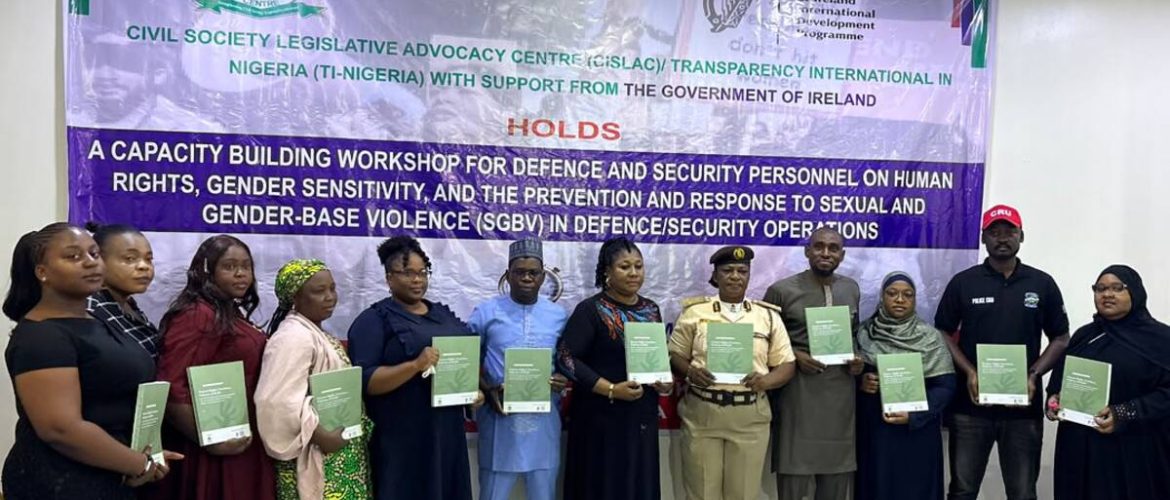
Authorities of defence and security agencies in Nigeria have been urged to address institutional discrimination, intimidation, harassment and abuse of authority against female personnel, following revelations of persistent gender-related challenges within the country’s security institutions.
Participants at a capacity-building workshop on human rights, gender sensitivity and Sexual and Gender-Based Violence (SGBV) prevention and response in security operations also called for stronger accountability mechanisms, confidential reporting channels and effective protection for survivors of sexual abuse.
The concerns were contained in a communiqué jointly signed by the Executive Director of CISLAC/TI-Nigeria, Comrade Auwal Musa Rafsanjani, and Mr Maurice Chukwu, a researcher at Amnesty International in Nigeria, at the end of a workshop organised by CISLAC/Transparency International Nigeria (TI-Nigeria), with support from the Government of Ireland, in Abuja.
The participants observed that women continued to face barriers to equal participation, leadership opportunities, appointments, promotions and career advancement in defence and security agencies, attributing the situation partly to gender stereotypes, discrimination and inadequate institutional awareness.
They further identified unequal power relations between senior and junior personnel as a major source of vulnerability to intimidation, harassment, exploitation and abuse of authority, particularly where promotion and career progression depend heavily on recommendations from superior officers.
The communiqué also highlighted inadequate supervision during night duties and field operations, poor accommodation arrangements, gender imbalances in duty assignments and inappropriate search procedures involving female civilians as factors that could expose women to harassment and abuse.
Stakeholders who spoke during the workshop also warned that security checkpoints and other operational environments could provide opportunities for the exploitation of vulnerable civilians.
At the workshop, participants drawn from civil society organisations (CSOs) and security agencies called for the establishment and strengthening of accessible and confidential SGBV reporting channels, including dedicated hotlines, official telephone numbers, email addresses, complaint boxes and secure digital platforms.
They also recommended strengthening Gender Desks and introducing clear procedures to protect complainants, survivors and witnesses against intimidation, victimisation and retaliation.
The participants further demanded prompt, impartial and professional investigations into reported cases, with appropriate disciplinary measures against personnel found responsible for misconduct, while suspected criminal offences should be referred to relevant law enforcement and prosecutorial authorities.
They also advocated periodic reviews and annual reporting of complaints, investigations and disciplinary outcomes without compromising survivors’ identities.
In a significant development, the workshop featured the official launch of a validated baseline assessment report titled ‘Human rights practices, patterns of SGBV and the effectiveness of existing complaint and accountability mechanisms within Defence and Security Agencies’.
The report was launched by the Executive Secretary of the National Human Rights Commission (NHRC), Chief Anthony Ojukwu, who was represented by the Director of the Women and Children Department, Mrs Ngozi Okore.
The assessment examined human rights practices, patterns of SGBV and the effectiveness of existing institutional complaint and accountability mechanisms, highlighting gaps requiring policy and institutional intervention.
The workshop, which featured discussions on women’s participation and gender mainstreaming, confidential SGBV reporting and accountability mechanisms, as well as institutional and operational risks contributing to sexual and gender-based violence, was attended by defence and security personnel, representatives of the Ministries of Defence, Interior and Women Affairs, NHRC, ICPC, NDLEA, civil society organisations, women’s rights activists and the media.
Participants also recommended mandatory gender and cultural sensitivity training for all personnel, improved representation of women in leadership and decision-making structures, regular SGBV risk assessments, gender-balanced duty arrangements and adequate separate accommodation and sanitary facilities during deployments.
The stakeholders further called for stronger collaboration between security institutions, oversight bodies, civil society organisations and healthcare providers to ensure survivors have access to psychosocial care, medical services, legal assistance and safe accommodation.
Reaffirming their commitment to human rights protection, gender equality and institutional accountability, the participants urged all participating agencies to develop agency-specific action plans with designated focal persons, implementation timelines and measurable indicators.
WATCH TOP VIDEOS FROM NIGERIAN TRIBUNE TV