FG seeks private sector, development partners’ support for Green Schools Initiative
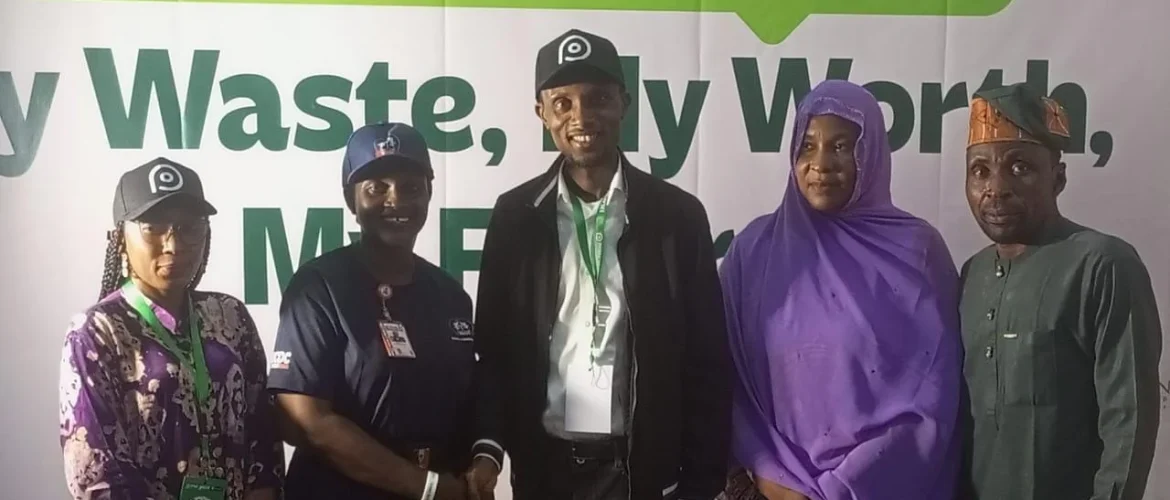
The Federal Government on Wednesday called on the organised private sector, development partners and other stakeholders to support the Green Schools Initiative Nigeria (GSIN) through funding, technical assistance, environmental learning materials and institutional collaboration.
The Director, Pollution Control and Environmental Health Department of the Federal Ministry of Environment, Mrs Omotunde Adeola, made the appeal in Abuja at the Green Schools Initiative Nigeria 2.0 Grand Finale and Award Ceremony, organised by the Printrite Foundation for Sustainable Environment and Education (PFSEE), established by Sir Austin Igwe.
The event, themed ‘My Waste, My Worth, My Future’, featured the presentation of scholarships worth N1.7 million to 10 outstanding students selected from participating secondary schools in the Federal Capital Territory, following six months of environmental sustainability activities and waste-to-wealth projects.
Adeola, who was represented by the Assistant Director, Solid Waste Management Division, Mr Dangiwa Ewa Orume, commended PFSEE for sustaining the initiative, describing it as a laudable effort towards nurturing environmentally responsible young citizens and integrating environmental consciousness into Nigeria’s educational system.
She observed that environmental challenges, including climate change, pollution, biodiversity loss, deforestation, poor waste management and unsustainable consumption patterns, required urgent collective action beyond government policies, regulations and enforcement.
According to her, addressing the challenges requires a fundamental change in attitudes, values and everyday practices, particularly among young people who will inherit the responsibility of managing the environment.
“Schools are not merely centres for academic learning; they are also important platforms for developing positive attitudes, responsible behaviours and practical environmental stewardship,” she said.
She noted that, through initiatives such as GSIN, students were encouraged to appreciate tree planting, proper waste segregation, recycling, water conservation, energy efficiency, biodiversity protection and sustainable lifestyles.
She also called for the establishment and strengthening of environmental clubs and societies in secondary and tertiary institutions, stressing that such platforms would enable students to translate environmental knowledge into practical actions within their schools and communities.
She urged schools to adopt practical environmental management systems, establish tree nurseries and gardens, promote waste separation at source, discourage indiscriminate waste disposal and embrace circular economy principles.
Adeola further encouraged PFSEE to expand the initiative to more schools across the six geopolitical zones to ensure that environmental education and participation were accessible to children in both urban and rural communities.
“I also call on the private sector, development partners and other stakeholders to support this initiative through technical assistance, funding, provision of environmental learning materials and other forms of institutional collaboration,” she said.
She, however, stressed that the success of the initiative should not be measured by the number of awards presented but by the positive environmental changes sustained in schools and communities.
“The true success of the Green Schools Initiative will not be measured only by the number of awards presented today, but by the positive environmental changes sustained in our schools and communities,” she stated.
She urged students to become environmental ambassadors by planting trees, protecting existing green spaces, reducing waste, reusing materials and recycling appropriately, while encouraging teachers and school administrators to provide the leadership required to sustain environmental consciousness among learners.
In his keynote address, the Executive Director of PFSEE, Sir Austin Igwe, said the 2026 theme was designed to demonstrate that materials commonly discarded as waste could be transformed into useful and economically valuable products.
“Our theme carries a simple idea: here, we don’t just recycle. We upcycle. What many people throw away, our school children have learnt to turn into something useful, something valuable, something they can be proud of,” he said.
Igwe explained that GSIN commenced in 2025 and had expanded considerably in its second edition, with 30 active public and private schools in the FCT and neighbouring communities participating in activities built around school clean-ups, waste separation, community clean-up campaigns, tree planting and waste-to-worth projects.
He disclosed that PFSEE had nursed 12,600 trees through its ‘I Plant A Tree’ initiative, while participating schools nurtured 6,000 additional economic trees, including palm, guava and lemon trees, during the current programme.
According to him, the trees would provide environmental benefits, including shade, while also generating fruits and potential income for schools and their host communities.
“To the school children, I say this directly: you are not only the leaders of tomorrow. You are leading today. Every bin you filled correctly, every street you cleaned, every seedling you watered is a lesson to the adults in this room,” he said.
Igwe urged government agencies, corporate organisations and development partners to strengthen their collaboration with PFSEE, saying the expansion of the initiative would enable more schools and young Nigerians to embrace environmental responsibility and contribute to building a cleaner, greener and more sustainable country.
The PFSEE Programme Coordinator, Mrs Esther Atar, explained that the initiative had grown from six schools at inception to 50 participating schools in its second edition, following increased demand and collaboration with relevant educational institutions.
She said the foundation had expanded its engagement through partnerships with the FCT Secondary Education Board and other institutions, which had provided technical support and other resources towards the success of the programme.
Atar explained that the initiative was designed around four major components: school environmental cleanliness and waste separation, community clean-up campaigns, the ‘I Plant A Tree’ initiative and waste-to-wealth projects.
She disclosed that the programme introduced waste-to-wealth activities in its second edition to enable students to transform materials collected and separated within their schools into useful products, rather than merely disposing of them.
“Now, the environment they have kept clean, they need to learn how to start sorting the waste they generate. They need to learn how to separate them because all waste materials are not of the same component,” she said.
She added that the community clean-up component was introduced to extend the environmental impact of participating schools beyond their premises by encouraging students to sensitise residents and clean up their host communities.
Atar further explained that the foundation deliberately focused on economic trees to encourage long-term environmental protection and discourage indiscriminate felling.
According to her, out of the 6,000 trees planted under the programme, 3,000 were palm trees, alongside lemon and other fruit-bearing varieties, with schools encouraged to plant them within their premises or in their host communities where space was available.
She said participating schools had been assessed based on the number of trees planted and successfully germinated, the effectiveness of community outreach programmes, waste separation practices and the quality of products developed from recycled materials.
In his remarks, the Chairman of the Nigerian Environmental Society, FCT Chapter, TLP Leke Olushola Emmanuel, commended PFSEE for introducing environmental consciousness to young people at an early stage.
He described the Nigerian Environmental Society as an advocacy organisation committed to environmental protection and said the initiative would help students develop sustainable environmental habits that would remain with them throughout their lives.
“We are happy to see what you are doing. There is nothing left to waste. We don’t believe that this is a waste because what is meant to be a waste, they are all resources,” he said.
Emmanuel maintained that materials often regarded as waste could be converted into wealth, urging students and participating schools to sustain their commitment to environmental protection.
He also pledged the continued partnership of the Nigerian Environmental Society with PFSEE, describing all participating students and schools as winners because of their involvement in the environmental campaign.
Similarly, the Director of the Abuja Environmental Protection Board (AEPB), Mrs Kate Ogbonna, applauded PFSEE for promoting environmental consciousness among schoolchildren through the initiative.
Ogbonna described the programme as timely, noting that environmental sustainability could not be achieved through government efforts alone but required collective responsibility, public awareness and the active participation of younger generations.
She expressed satisfaction with the activities undertaken by participating schools, particularly waste separation, tree nurturing, school clean-up exercises, community sensitisation and the transformation of waste materials into useful products.
“These activities demonstrate that waste should not always be seen as something to discard, but as a resource that can be recovered, reused and converted into economic value,” she said.
The AEPB Director, who was represented by Assistant Chief Environmental Health Officer Dansu Victor, urged students to sustain proper waste disposal, recycling and conservation practices, adding that the board remained committed to environmental protection, sustainable waste management and public enlightenment across the FCT.
She also called on stakeholders to sustain the momentum beyond the competition, stressing that environmental responsibility must become a way of life in schools, homes and communities.
The grand finale featured exhibitions of products developed by students from discarded materials, presentations on environmental sustainability, recognition of participating schools and teachers, and the presentation of scholarships to 10 outstanding students.
WATCH TOP VIDEOS FROM NIGERIAN TRIBUNE TV