Reps committee demands written apology from Mining Marshals commander over allegations
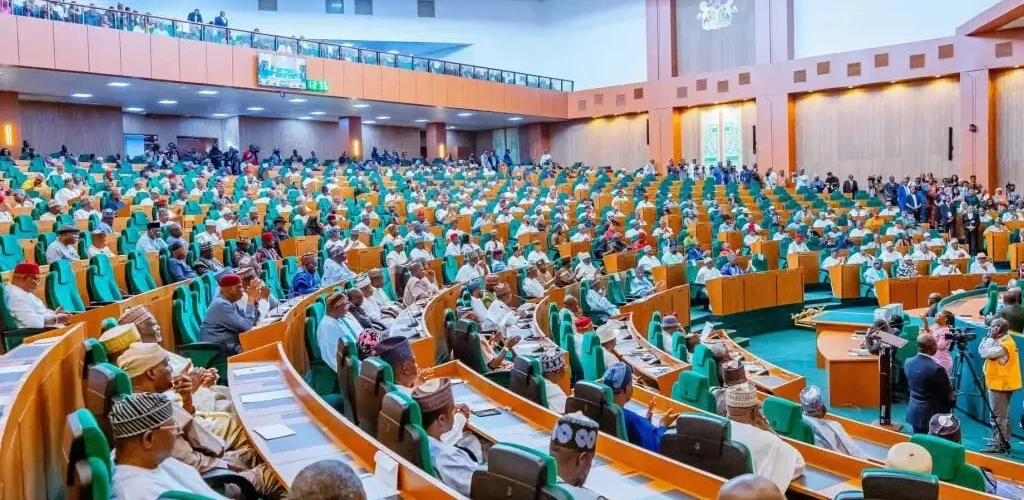
The House of Representatives Committee on Solid Minerals Development has slammed the Commander of the Mining Marshals of the Nigeria Security and Civil Defence Corps (NSCDC), ACC Attah John Onoja, over his alleged reckless and unsubstantiated allegations against one of its members, demanding a formal written apology.
The Committee also expressed dismay over the NSCDC’s failure to produce critical operational records relating to allegations of arbitrary arrests, unlawful detentions, abuse of enforcement powers and the closure of mining businesses across the country.
The confrontation unfolded during an investigative hearing of the Committee, where the Chairman, Hon. Jonathan Gaza, and other members questioned the Commander over a controversial letter in which he accused the member representing Adavi/Okehi Federal Constituency of Kogi State, Hon. Abdulmalik Danga, of allegedly working against the Federal Government’s efforts to sanitise the mining sector in the interest of illegal mining cartels.
The lawmakers demanded to know the evidence on which the Commander based his allegations, describing the accusations as serious imputations that required immediate clarification.
At the centre of the controversy was a letter dated July 24, 2026, addressed to the Speaker of the House of Representatives by ACC Onoja, in which he characterised the lawmaker’s actions as anti-government, politically motivated and allegedly designed to protect illegal mining operators whose activities were being disrupted by the Mining Marshals.
Speaking while kicking off the sitting, the Chairman of the Committee, Hon. Gaza, said the Committee had formally taken cognisance of the correspondence, describing its contents as an affront to the integrity of the affected lawmaker and the institution of the House.
According to him, “the Committee has taken formal cognisance of the unsolicited correspondence dated 24 July 2026 (Ref: NSCDC/NHQ/CG/MM/Vol.07/41/2026) addressed to the Honourable Speaker by ACC Attah John Onoja, Commander of the Mining Marshals, containing serious imputations against a Member and the integrity of this House.”
The Chairman subsequently confronted the Commander with the second paragraph of the letter, which stated:
“While we respect the rules of lawmaking in shaping the society through oversight legislative functions, we strongly view the action of Abdulmalik Danga as anti-government and motivated by illegal mining cartels whose unlawful activities are being disrupted by the sanity being restored in the mining sector.”
The correspondence further accused the lawmaker of acting in bad faith and pursuing political interests, while suggesting that he would not enjoy legislative immunity if subjected to judicial scrutiny.
The allegations drew sharp reactions from members of the Committee, who questioned the propriety of a public officer making such serious accusations against a serving legislator without presenting verifiable evidence.
However, ACC Onoja sought to distance himself from any suggestion that he intended to challenge the authority of the House, maintaining that the letter was written in his personal capacity and was intended to address the motion raised by the lawmaker.
While defending his action, Onoja said: “Mr Chairman, permit me to state clearly on record. My response, my letter, in my personal capacity as the Commander of the Mining Marshals, is not in any way looking into the legislative powers of the Committee. The letter is speaking to the motion as moved.”
However, Hon. Gaza rejected the explanation, insisting that the contents of the letter went beyond a response to a legislative motion and effectively portrayed the House as an institution acting against the Federal Government and in the interest of illegal mining cartels.
The Chairman questioned how the Commander could make such allegations against a member of the legislature without producing evidence to substantiate them, particularly when the Committee was exercising its constitutional oversight responsibility.
He also challenged the Commander’s attempt to characterise the correspondence as personal, noting that it was written on the official letterhead of the NSCDC and carried an official reference number.
Consequently, Hon. Gaza demanded that the Commandant-General of the NSCDC, Ahmed Abubakar Audi, clarify under oath whether the allegations represented the official position of the Corps or whether ACC Onoja had acted without authorisation.
Responding, the Commandant-General disclosed that the Corps had introduced an internal directive requiring officers to obtain prior approval before issuing official correspondence.
He explained that, under the NSCDC’s administrative procedures, any officer authorised to communicate on behalf of the Commandant-General must sign such correspondence in the CG’s name.
According to him, since ACC Onoja signed the letter in his personal capacity, he should personally take responsibility for its contents.
“According to our administrative procedure, if an officer is instructed to write a letter on behalf of the CG, the officer will sign that letter for the Commandant-General. But if you check the letter, you’ll see that there’s no… So he signed it in his own personal capacity.
“If the letter states that it is for the Commandant-General, if an officer signs the letter and we take it administratively, no officer has the right to sign and send a letter out without signing for the Commandant-General. If he signs a letter in his own capacity, then he goes for it.”
The Committee, however, maintained that the use of official NSCDC stationery and reference details raised serious questions about the circumstances surrounding the issuance of the letter and the extent of the Corps’ institutional involvement.
In a related development, the Committee accused the NSCDC of failing to comply with its statutory demand for comprehensive records relating to the Corps’ mining enforcement operations.
Hon. Gaza recalled that on October 20, 2026, the Committee issued a formal Statutory Demand for Documentary Records and Notice of Mandatory Personal Appearance (Ref: NASS/10HR/HCSMD/HC/CG/NSCDC/MMI/001) to the Commandant-General.
The directive required the CG to appear before the Committee with a comprehensive corporate response, verified on oath, alongside ten properly bound and paginated hard copies and an identical electronic copy of all requested primary records.
However, the Committee said the stipulated deadline of 2:00 p.m. on Tuesday, November 3, 2026, elapsed without the submission of the required written response and documentary records to its Secretariat.
The lawmakers said the demand followed several petitions and allegations against the NSCDC bordering on arbitrary arrests, unlawful detentions, intimidation of mining operators and other enforcement practices allegedly infringing on the rights of Nigerians.
Expressing displeasure over the failure to comply, Hon. Gaza insisted that the Committee would not accept verbal explanations in place of the primary documents required to establish the circumstances surrounding the Corps’ operations.
He stressed that the Commandant-General’s physical appearance before the Committee did not discharge the statutory obligation to produce the requested records.
“Let it be clear on the record that personal attendance does not cure or waive the statutory obligation to produce primary, certified and unedited documentary records within the possession, custody or control of the Corps,” he said.
The Chairman further directed the Commandant-General, the Commander of the Mining Marshals and all zonal, state and FCT commands of the NSCDC to immediately preserve all records relating to their enforcement activities.
The records include physical site records, arrest and custody registers, operational logs, financial and banking records, vehicle registers, electronic metadata, official communications and CCTV recordings across the 36 states and the Federal Capital Territory.
He warned that any attempt to alter, conceal, backdate, remove or destroy relevant records, as well as intimidation, coaching or retaliation against officers and witnesses, would attract serious legal consequences.
Citing Section 14 of the Legislative Houses (Powers and Privileges) Act, 2017, and Section 19 of the NSCDC Act, the Chairman warned that the Committee would invoke the relevant statutory provisions against any officer found culpable.
At the end of the proceedings, the Committee demanded a formal written apology from ACC Onoja over the allegations against Hon. Danga and gave the NSCDC one week to submit all outstanding documentary records.
The lawmakers insisted that the Corps must account for its enforcement activities and provide verifiable evidence to support its operations, stressing that the investigation would not be frustrated by failure to comply with the Committee’s demands.
Meanwhile, stakeholders in the solid minerals sector accused the Mining Marshals of arbitrary arrests and detention of mining operators, sealing of mining sites and disruption of legitimate businesses, despite the operators’ possession of valid licences issued by the Ministry of Solid Minerals Development.
The stakeholders, who appeared before the Committee, alleged that ACC Onoja and his operatives had repeatedly labelled their businesses illegal mining operations, notwithstanding the licences and regulatory approvals they claimed authorised them to operate.
They said the enforcement actions had inflicted significant financial losses on mining companies, with some operators allegedly forced to suspend or completely shut down their businesses.
According to the investors, several mining sites remained closed, leaving expensive machinery, heavy-duty equipment and other investments idle, while companies continued to bear operational costs and accumulate financial liabilities.
They questioned the rationale behind subjecting operators who had obtained government-issued licences and fulfilled regulatory requirements to arrests, detention and business closures, insisting that any dispute over the legality of mining operations should be addressed through established regulatory and legal procedures.
The stakeholders warned that the alleged conduct of the Mining Marshals was creating uncertainty in the industry and undermining investor confidence at a time when the Federal Government was seeking to attract greater investment into the solid minerals sector.
The investors therefore called for a comprehensive investigation into the activities of the Mining Marshals, greater accountability in enforcement operations and adequate protection for legitimate mining operators.
They insisted that the fight against illegal mining must not become a pretext for violating the rights of genuine investors, stressing that enforcement agencies must operate within the law and be held accountable for any abuse of their powers.
WATCH TOP VIDEOS FROM NIGERIAN TRIBUNE TV