Cardoso: 53% of Nigerian adults save through banks, but only 10% borrow formally
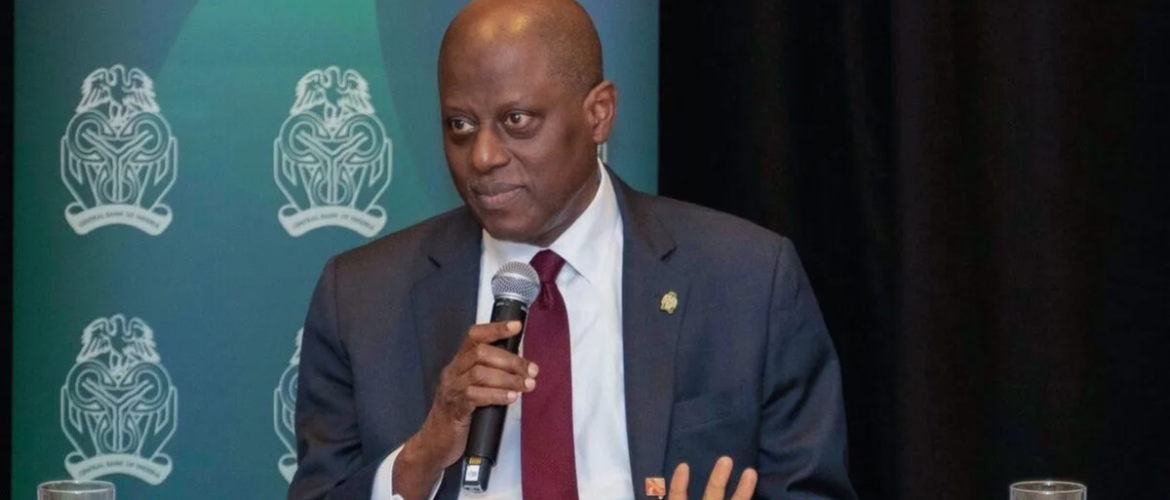
Central Bank of Nigeria (CBN) Governor, Olayemi Cardoso, has said only 10% of Nigerian adults borrow through formal financial channels, despite 53% saving formally.
Cardoso disclosed this at the 61st Annual Bankers Dinner of the Chartered Institute of Bankers of Nigeria (CIBN) in Lagos, citing findings from the 2026 Access to Financial Services Survey.
The survey shows that about 79% of Nigerian adults use formal or informal financial services, while 64% use digital financial services.
Next phase of financial inclusion
He said the next phase of financial inclusion should focus on making financial services more useful in people’s daily lives, rather than simply expanding access.
- “While 53% of adults now save formally, only 10% borrow through formal financial channels,” Cardoso said.
- “We have made considerable progress in bringing Nigerians into the financial system. The next frontier is to make financial access more useful in people’s daily lives,” he said.
CBN seeks better access to credit
Cardoso said not every household needs or should take on credit, but businesses with viable prospects should be able to access suitable financing. Individuals, he added, should have financial products that meet their needs and circumstances.
He cited the example of a market trader in Kano who receives about 200 transfers a day, saves consistently and has built a viable business.
- “Financial inclusion should mean more than access to digital payments,” he said.
- “A stronger, better-capitalised banking system should enable her to use that financial track record to access credit for expansion.”
For households, Cardoso said, financial inclusion should also mean being able to save securely, manage unexpected expenses and trust the institutions holding their money.
He said these outcomes should increasingly determine how the effectiveness of Nigeria’s financial system is assessed.
Banks and fintechs urged to deepen inclusion
Cardoso said Nigeria’s financial system now includes banks, fintech companies, payment service providers, mobile money operators and other financial institutions.
For many Nigerians, particularly young people and small business owners, he noted, the most frequent interaction with financial services may be through a mobile application, payment platform or neighbourhood agent rather than a bank branch.
He said fintechs and payment providers bring innovation and customer reach that complement the strengths of traditional banks.
- “Our task is to support an ecosystem in which these capabilities reinforce one another, competition improves services and financial innovation enables greater economic participation,” he said.
Monthly remittances reach $1 billion
Cardoso also said monthly remittance inflows through International Money Transfer Operators (IMTOs) had reached $1 billion, meeting a target set by the CBN two years ago.
He said the bank had now set a target of $1.5 billion in monthly remittance inflows by the middle of 2027.
The milestone follows the CBN’s earlier efforts to increase formal remittance inflows, improve foreign exchange liquidity and reduce reliance on informal channels.