CBN plans new regulatory rulebook to strengthen banking oversight
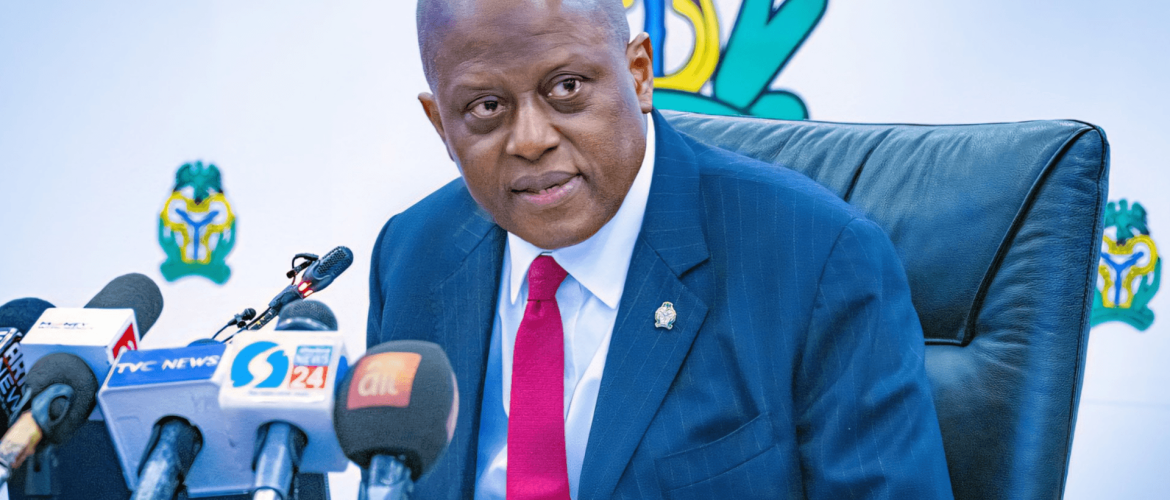
The Central Bank of Nigeria (CBN) plans to introduce a comprehensive regulatory rulebook in 2027 to provide greater clarity on regulatory requirements and supervisory standards for financial institutions.
Olayemi Cardoso, governor of the CBN, disclosed this at the 61st annual bankers’ dinner organised by the Chartered Institute of Bankers of Nigeria (CIBN) in Lagos.
Cardoso said the planned rulebook forms part of efforts to institutionalise the economic and financial sector reforms undertaken over the past three years, strengthen regulatory transparency and ensure consistency in the supervision of financial institutions.
“In the coming year, we will take a further step towards this objective with the introduction of a comprehensive and accessible regulatory rulebook, bringing greater clarity to regulatory requirements and supervisory standards,” he said.
According to him, the framework will promote consistency, strengthen accountability and give financial institutions greater certainty in their dealings with the apex bank.
He explained that institutionalising reforms requires strengthening the framework guiding monetary policy, embedding transparency and accountability in regulatory processes, and ensuring that decisions are based on clear rules, sound analysis and consistent application.
Cardoso said the CBN’s broader objective was to ensure that the gains recorded in the economy and financial system over the past three years were sustained through stronger institutions and improved market practices.
Three years after assuming office as CBN governor, he said the apex bank had made progress in restoring confidence, addressing economic distortions and strengthening the foundations of the financial system.
He cited moderating inflation, improved transparency in the foreign exchange market, stronger external reserves and the successful completion of the banking sector recapitalisation exercise as evidence of progress.
Read also: Naira gains most in a month after CBN expands BDC dollar access
Nigeria’s headline inflation declined from 24.48 percent in January 2025, the first reading of the rebased index, to 14.06 percent in October 2026, while external reserves had risen to their highest level in approximately 18 years.
The economy also recorded real gross domestic product growth of 4.43 percent in the second quarter of 2026, while international rating agencies had recognised the progress made in restoring macroeconomic stability.
However, Cardoso said the priority was now to ensure that these improvements translated into productive investment, better financial services and wider economic opportunities.
For the wider financial system, he identified deeper and more liquid markets, stronger risk management, effective corporate governance and greater reliance on transparent market mechanisms as necessary to sustain the reforms.
He said reforms would become durable when they were reflected not only in regulatory frameworks but also in how financial institutions operated and markets functioned.
Read also: Naira seen strengthening to N1,360 as CBN lifts parallel dollar market supply
The CBN governor also stressed the importance of strengthening monetary policy credibility through improved liquidity management, better transmission of policy decisions through financial markets and a transparent, data-driven approach.
He said these improvements were underpinning the development of an inflation-targeting framework, which requires reliable data, sound analysis, clear communication and consistent responses to changing economic conditions.
Cardoso said the apex bank’s ambition remained to achieve sustainable lower single-digit inflation to protect purchasing power, provide businesses with greater certainty to plan and invest, and support long-term economic growth.
Read also: Ever Joj Gold, KimmelFX, SohCahToa, 83 other BDCs make CBN’s $1m cash dollar list
He added that sustained fiscal discipline, alongside credible and consistent monetary policy, would help create the conditions for interest rates to decline sustainably.
Cardoso also recalled that the banking sector recapitalisation exercise introduced in March 2024 had been successfully concluded earlier in 2026, with 33 banks meeting the revised minimum capital requirements and approximately N4.65 trillion raised in fresh capital.
He said the achievement demonstrated the confidence of domestic and international investors in Nigeria’s financial system, adding that the next challenge was to put the strengthened capital base to productive use.

Hope Moses-Ashike is an Associate Editor, Banking and Finance, with more than a decade of experience reporting on Nigeria’s financial system and broader economy. She closely tracks market movements, monetary policy decisions, company disclosures, regulatory actions, economic indicators, and global developments, and interprets what they mean for businesses, investors, policymakers, and households. Her reporting helps readers understand complex issues such as inflation trends, foreign exchange market dynamics, interest rate decisions, bank performance, and investment risks.
She also covers major international events and periodically travels to Washington, D.C., to report on the World Bank/IMF Spring and Annual Meetings.
Her dedication to financial journalism has earned her multiple recognitions and invitations to high-level professional development programmes. She is an alumna of the International Visitors Leadership Programme (IVLP) in the United States and holds an Advanced Financial Journalism Certificate from the Press Association Training in London, UK. Her other notable achievements include completing the Lagos Business School CMC Programme, the Bloomberg Media Africa Initiative Programme, and a Master Class in Journalism at Rhodes University in South Africa.