FG kicks off N1.45 trillion rehabilitation of Apapa, Tin Can ports
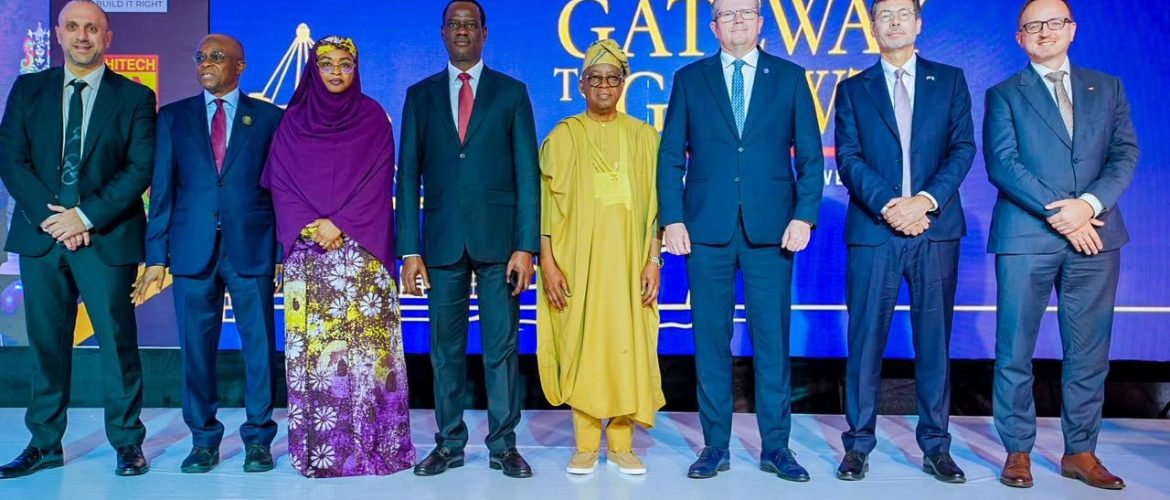
The Federal Government has begun a N1.45 trillion modernisation and upgrade of the Lagos Port Complex, Apapa, and Tin Can Island Port, in a project expected to generate at least 20,000 direct and indirect jobs.
The development was disclosed by the Minister of Marine and Blue Economy, Adegboyega Oyetola, in a post on his official X account on Wednesday.
Valued at £746 million, the project is expected to address longstanding infrastructure deficits at the two major Lagos ports, improve operational efficiency, reduce logistics costs and attract more international shipping lines.
FG begins N1.45 trillion Lagos ports upgrade
Oyetola described the groundbreaking as a major step towards transforming Nigeria’s maritime sector, noting that it was the country’s first port modernisation project in 50 years.
He said the investment would address infrastructure gaps, improve cargo-handling operations and strengthen Nigeria’s position in regional and international trade.
- Oyetola’s post read: “Today, we took a decisive step towards the transformation of Nigeria’s maritime sector with the groundbreaking of the modernisation and upgrade of the Lagos Port Complex, Apapa, and Tin Can Island Port.
- “This £746 million investment, valued at approximately N1.45 trillion, is a strategic intervention that will address longstanding infrastructure deficits, improve operational efficiency, reduce logistics costs, attract international shipping lines and create at least 20,000 direct and indirect jobs. It is Nigeria’s first port modernisation project in 50 years!”
The proposed upgrades will include modern quay walls and berths, dredging and improvements to navigation channels, new cargo-handling equipment, improved access facilities and digitally enabled port operations.
According to the minister, the interventions are also expected to strengthen export capacity, support local industries and improve trade facilitation, particularly as Nigeria seeks to benefit from opportunities under the African Continental Free Trade Area (AfCFTA).
Experts differ on Lagos ports upgrade
- Tonami Playman, an independent transport researcher, argued that relocating major port activities to Lekki would provide a more sustainable solution to congestion at Apapa and Tin Can, describing the locations of the existing ports as a fundamental constraint to growth and cargo throughput.
- Abayomi Duyile, Chairman of the Apapa chapter of the National Council of Managing Directors of Licensed Customs Agents, disagreed, arguing that transferring operations from federally owned ports to a privately operated facility was not feasible.
- Duyile maintained that rehabilitation of the existing facilities was long overdue, particularly repairs to critical infrastructure such as Tin Can Port’s access roads and the provision of equipment and machinery for terminal operators.
Otunba Frank Ogunojemite, President of the Africa Association of Professional Freight Forwarders and Logistics of Nigeria (APFFLON), said the rehabilitation could reduce cargo delays, lower logistics costs and help Nigeria recover cargo traffic diverted to neighbouring countries, although he cautioned that debt and other infrastructure bottlenecks could limit the benefits.
Port infrastructure upgrade needs operational reforms
Beyond physical infrastructure, industry stakeholders have identified operational inefficiencies, poor inter-agency coordination and congestion as major factors affecting cargo movement at Apapa and Tin Can Island ports.
- In an earlier engagement with Nairametrics, Obinna Nwaogu, Chief Operations Officer of TTP Limited, identified delays at terminal loading and discharge points, congested container yards, manual documentation and multiple agency approvals as factors slowing cargo movement.
- Nwaogu also highlighted inadequate loading areas, limited yard space, insufficient cargo-handling equipment, poor access roads, drainage problems and multiple checkpoints as challenges affecting truck movement around the ports.
- Ogunojemite said cargo dwell time averaged 18 days at the time of his interview, attributing the delays to bureaucracy, multiple inspections, poor coordination among government agencies and weak infrastructure.
- He recommended full automation of port processes, a functional single-window system, 24-hour port operations and stronger coordination among government agencies.
Nwaogu called for dedicated truck lanes, improved loading and offloading bays, modern scanning equipment, streamlined gate processes and better container yard planning. He also advocated expanded access roads and digital traffic management platforms, including Ètò, alongside CCTV and other security infrastructure.
The government has said port operations will continue throughout the construction period and that the project will be delivered in line with required engineering and operational standards. However, the benefits of the N1.45 trillion investment will also depend on how effectively these wider operational challenges are addressed.