

FG moves to close accountability gap in health sector, targets 90% compliance
The Federal Government has moved to close the accountability gap in Nigeria’s health sector, setting a target of at least 90 per cent implementation of resolutions of the National Council on Health and demanding clear timelines, funding and measurable results from state governments and relevant institutions.
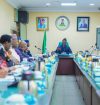
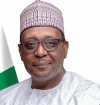
The Minister of State for Health and Social Welfare, Dr Iziaq Adekunle Salako, stated this on Wednesday at the opening of the 67th Regular Session of the National Council on Health (NCH) in Lafia, Nasarawa State.
The meeting, with the theme, “From Commitment to Results: Delivering Quality and Equitable Healthcare for All Nigerians,” brought together federal and state health officials, development partners and other stakeholders to review progress and agree on strategies for improving healthcare delivery.
Salako said the target was to increase the implementation rate of council resolutions from the current 75 per cent to at least 90 per cent, stressing that policy commitments must translate into tangible improvements in healthcare services across the country.
He challenged council members to subject every memorandum presented for consideration to four critical questions: how it aligns with President Bola Tinubu’s health transformation agenda, who would be responsible for its implementation, the timeline for execution and how its delivery would be measured.
“A commitment is only as good as the result it delivers,” the minister said.
He said the Federal Government declared an end to business as usual in 2024 and introduced a unified sector-wide blueprint to improve healthcare delivery, reduce financial hardship and align federal and state governments, as well as development partners, under a common agenda.
According to him, the 2025 council meeting in Maiduguri, Borno State, focused on accelerating pathways to universal health coverage, while the 66th meeting in Kano reinforced the need to recognise healthcare as a fundamental human right.
He said the health sector had recorded progress in primary healthcare revitalisation, health insurance expansion, recruitment and training of frontline health workers, infrastructure development, digital health initiatives and local pharmaceutical manufacturing.
Salako added that interventions to reduce preventable maternal, newborn and child deaths were yielding improvements through increased facility deliveries, expanded emergency obstetric response and declining facility-reported maternal and neonatal deaths.
However, he warned that sustaining the gains required reliable electricity, essential medicines and equipment, adequate staffing and accountable financing that reaches families in every community.
The minister urged states to prioritise maternal and child survival, expand Basic Emergency Obstetric and Newborn Care (BEmONC) facilities and extend the Maternal and Neonatal Mortality Reduction Innovation Initiative (MAMII) to all 774 local government areas from 2027.
On health financing, he called for increased domestic investment, urging governments to accelerate progress towards the 15 per cent funding target under the Abuja Declaration through timely budget releases and full implementation of approved allocations.
He also directed states recording less than 50 per cent coverage of four antenatal care visits or rising numbers of zero-dose children to provide costed recovery plans in their 2027 operational plans.
On human resources for health, Salako described the protection and retention of skilled health workers as a national imperative, urging states to develop workable, costed plans for absorbing and retaining healthcare professionals while strengthening frontline training.
He said implementation of council resolutions would be tracked at the next Joint Annual Review, insisting that stakeholders must be held accountable for decisions reached at the meeting.
Earlier, the Nasarawa State Commissioner for Health, Dr Gaza Gwamna, said the state had recorded significant improvements in its health sector under the administration of Governor Abdullahi Sule, particularly in health insurance coverage and infrastructure development.
Gwamna disclosed that the state’s health insurance enrolment had increased from zero to nearly 300,000, representing about 8.5 per cent coverage of its population.
He said the state had also invested billions of naira in primary, secondary and tertiary healthcare infrastructure, established a drug supply agency and introduced a regulatory agency for private health facilities to address poor service delivery and quackery.
According to him, the establishment of the private facility regulatory agency was informed by concerns about the quality of healthcare services, particularly the increasing pressure on health facilities in communities bordering the Federal Capital Territory.
He added that Nasarawa was among the first states to embrace MAMII, which had strengthened interventions in five local government areas, particularly those sharing boundaries with the FCT.
The commissioner described hosting the 67th council meeting as a historic opportunity, noting that it was the first time the state had hosted the National Council on Health.
In his remarks, the Emir of Lafia, Justice Sidi Bage (retd.), welcomed the Coordinating Minister of Health and Social Welfare, Professor Muhammad Ali Pate, and other delegates on behalf of the state’s traditional rulers.
Bage described health professionals and policymakers as among the country’s most valuable human resources and assured participants of the hospitality and peaceful atmosphere of Nasarawa State.
Also speaking, the Acting Commander, Corps of Medical, Nigerian Army, Brigadier-General Innocent Alolo Enwuchola, who represented the Chief of Army Staff and other service chiefs, reaffirmed the military’s commitment to supporting national healthcare delivery.
He said the Armed Forces continued to provide medical services to serving personnel, their families and neighbouring civilian communities through military health facilities across the country.
Enwuchola called for stronger collaboration between the military, government institutions and other stakeholders to address emerging public health challenges, strengthen primary healthcare and improve access to quality services, particularly for vulnerable populations.
On behalf of civil society organisations, Dr Muhammad Lecky reaffirmed the commitment of CSOs to grassroots citizen participation, policy advocacy and accountability in the implementation of health sector reforms.
He urged stakeholders to ensure that the council’s resolutions translated into measurable improvements in primary healthcare, health financing, maternal and child health and universal health coverage.
Similarly, the World Health Organisation Country Representative in Nigeria, Dr Pavel Ursu, called for stronger domestic health financing, political commitment and coordinated action to ensure that the council’s decisions produced sustainable improvements in healthcare delivery.
Ursu, who spoke on behalf of development partners and United Nations agencies in Nigeria, said the National Council on Health remained an important platform for strengthening cooperation between federal and state governments.
He urged stakeholders to sustain progress in primary healthcare, reproductive, maternal, newborn, child and adolescent health, health security, workforce development, access to essential medicines and vaccines, and health information systems.
He also stressed the need to improve access to healthcare for displaced persons, mobile populations, vulnerable groups and underserved communities, reaffirming development partners’ commitment to supporting Nigeria’s health priorities.
WATCH TOP VIDEOS FROM NIGERIAN TRIBUNE TV