
Flutterwave CEO, Hamzat seek stronger corporate investment in Lagos digital economy
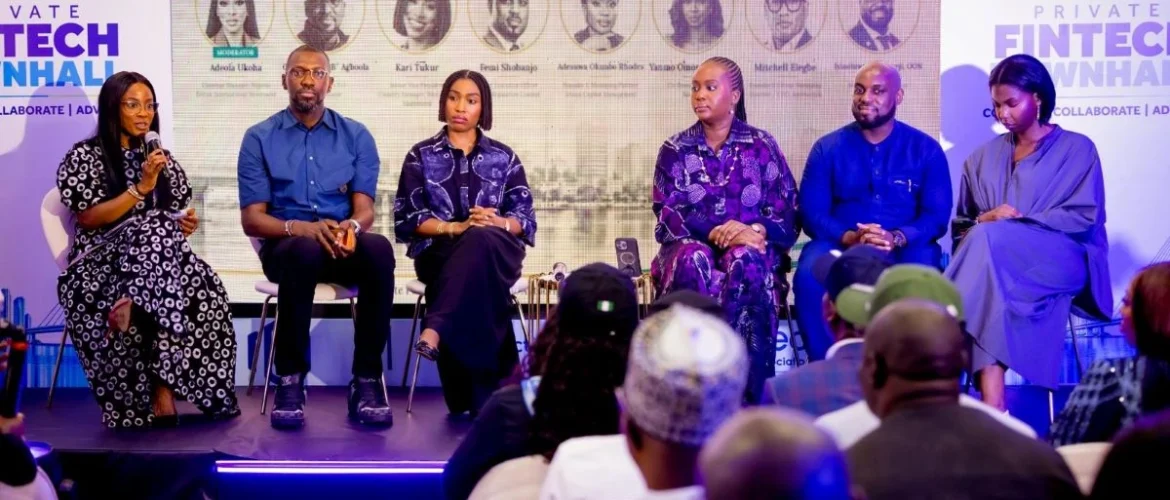
Flutterwave Co-founder and Chief Executive Officer, Gbenga Agboola, has called for predictable government policies, improved regulatory coordination and a business-friendly environment to attract investment into Nigeria’s fintech ecosystem, as Lagos State seeks stronger corporate partnerships to accelerate its digital economy.
Agboola made the call at a private fintech town hall in Lagos on Friday, November 20, 2026, where stakeholders discussed the state’s digital economy agenda for 2027–2031.
His position echoed Lagos State Deputy Governor, Dr Obafemi Hamzat, who urged businesses to invest more in research, digital infrastructure and innovation to unlock new economic opportunities.
The town hall, organised by MyCard Global in collaboration with the Fintech Association of Nigeria, had the theme, “The Lagos Digital Economy Blueprint: Co-Authoring the Lagos Digital Economy Agenda 2027–2031.”
Fintech CEOs Seek Regulatory Certainty
Agboola said businesses and investors needed regulatory certainty to commit capital, develop innovative solutions and scale their operations, warning that frequent policy and regulatory changes could create uncertainty for companies.
- He advocated stronger coordination among regulatory agencies, particularly in licensing, noting that approvals granted by one regulator should facilitate processes required by other relevant agencies.
- According to him, better coordination would eliminate unnecessary duplication, improve efficiency and reduce the regulatory burden on businesses operating within the fintech ecosystem.
- He also called for an enabling environment that would allow startups and innovators to experiment with new ideas and develop products within established regulatory frameworks.
- Agboola said improved regulatory efficiency, supportive tax policies and opportunities for innovation would encourage entrepreneurs to develop solutions, attract investment and expand the fintech sector.
His call aligns with Lagos State’s efforts to build a more integrated digital economy through private-sector partnerships, research funding, technology infrastructure and enterprise development.
Hamzat Pushes Corporate Research Investment
Hamzat urged corporate organisations to move beyond conventional engagement with government and invest more deliberately in research, innovation and solutions that address practical industry challenges.
He identified the weak connection between research institutions and the private sector as a major obstacle to translating promising innovations into commercially viable products and services.
- “We have seen a lot of ideas and young people bringing innovations, but how do we bring them to capital? How do we ensure that we understand the needs of the private sector and connect them to research?” he asked.
- Hamzat said Lagos had continued to support science-based research through platforms that allow young innovators to present ideas for possible funding, but stressed the need for a stronger commercialisation pipeline.
- Citing his doctoral research, he recalled that an oil company in the United Kingdom funded his research into reducing energy consumption in oil production, which reportedly achieved a 33% reduction in energy use.
- He urged companies to identify operational challenges, engage universities and research institutions, and fund studies capable of producing practical solutions.
The Deputy Governor said Lagos was working towards developing a coordinated innovation ecosystem connecting research, incubation, funding, industries and commercialisation.
He also disclosed that the state was working to expand its fibre-optic network from 2,400 kilometres to approximately 6,000 kilometres through partnerships with telecommunications companies and other private-sector stakeholders.
Lagos Expands Digital Infrastructure
Hamzat said the planned fibre-optic expansion would improve connectivity across schools, public institutions and other facilities, reduce the cost of doing business and provide a stronger foundation for technology-driven enterprises.
He disclosed that Lagos had about 1,028 public schools, with approximately 680 currently connected to the internet, adding that the government was working towards extending connectivity to all public schools.
- On data infrastructure, he said the state was developing an enterprise architecture that would enable government agencies to connect their databases through Application Programming Interfaces (APIs), ensuring data standardisation and interoperability across ministries and agencies.
- According to him, reliable data would improve service delivery, eliminate duplication and help government make more informed decisions on infrastructure needs and public investments.
The Deputy Governor further highlighted plans to allocate 10% of public procurement opportunities to startups, providing smaller businesses with access to government contracts and supporting their growth.
He said the government was also working towards ensuring payments to participating businesses were made within 15 days to strengthen their cash flow and expansion capacity.
Hamzat disclosed that women accounted for approximately 54% of startups that had undertaken work under the initiative, highlighting their contribution to entrepreneurship and innovation.
Lagos Digital Economy Attracts Investments
Earlier, MyCard Global Convener and Executive Director, Aderemi Fagbemi, said the gathering of fintech and technology companies represented the capacity and expertise required to drive Africa’s digital economy.
Participating organisations included Flutterwave, Paystack, PiggyVest, Kuda, PalmPay, Mastercard, Visa, Oracle, Interswitch, OPay, Moniepoint, Paga and Meristem, among others.
Fagbemi said the meeting was organised to strengthen collaboration between government and the private sector, noting that innovation could not thrive in isolation and that effective governance required the agility and contributions of businesses.
- “As someone proudly serving on Your Excellency’s Formal Sector Campaign Council, I see firsthand the immense passion and dedication driving this vision. We gathered because Lagos means business,” she said.
She identified tax harmonisation, the integration of digital payment infrastructure into municipal systems and the development of innovation corridors as key issues requiring attention to position Lagos competitively among global technology hubs.
What you should know
In March 2025, Governor Babajide Sanwo-Olu said Lagos State had attracted more than $1.2 billion in digital investments over five years to strengthen its digital economy and expand telecommunications infrastructure.
Sanwo-Olu said the investments supported the development of data centres, submarine cables and digital networks.
- “We have it on record that within five years of our administration, we have attracted investments in excess of about $1.2 billion directly into the digital space around building data centres, hyper-scale data centres, landing submarine cables, and creating a network of users and providers,” he stated.
The governor reaffirmed his administration’s commitment to strengthening digital infrastructure through collaboration with the Nigerian Communications Commission (NCC).
The latest town hall builds on the state’s efforts to attract private-sector investment, strengthen digital connectivity and expand opportunities for technology businesses, startups and innovators.