
NGX brings African tech companies, investors together at AT50 Lagos Market Open
The Nigerian Exchange (NGX) on Wednesday, November 18, hosted the AT50 Lagos Market Open, bringing together technology founders, regulators, investment bankers and capital-market executives to discuss how African technology companies can attract institutional funding and prepare for opportunities in public markets.
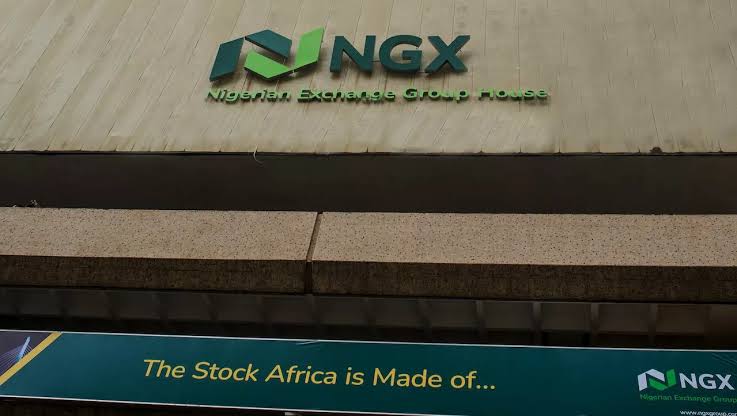
The event, organised by Indexa Exchange Group, with NGX as host and Standard Bank as lead partner, took place at Exchange House, Lagos Island.
It was the fourth exchange engagement under Indexa’s Africa Tech 50 initiative, following previous events at the London Stock Exchange in January, Johannesburg Stock Exchange in July and Egyptian Exchange in September.
Nigeria had a prominent place in the gathering, with 16 companies represented in the AT50 Index, the largest national representation among the 50 businesses tracked by the benchmark.
Among the senior figures listed for the programme were Temi Popoola, Group Managing Director of NGX Group; Jude Chiemeka, Chief Executive Officer of Nigerian Exchange Limited; Dr Emomotimi Agama, Director-General of the Securities and Exchange Commission; Gbite Oduneye, Chairman of Indexa Exchange Group; and Chris Godman of Standard Bank.
Technology executives, including Flutterwave’s Olugbenga Agboola, Paga’s Tayo Oviosu, Kuda’s Babs Ogundeyi, LemFi’s Ridwan Olalere and OmniRetail’s Deepankar Rustagi, were also listed among the contributors.
Much of the discussion centred on a challenge facing African technology businesses: how to grow beyond founder-led operations and build companies capable of attracting bigger investors.
The opening panel, titled Building Africa’s Next Generation of Institutions, examined what happens when businesses outgrow the structures on which they were founded. Discussions highlighted the need for capable boards, experienced management teams, proper internal processes and stronger corporate governance.
This is an important consideration for technology companies that have grown quickly but still depend heavily on their founders to run daily operations. As their funding needs increase, investors want to see businesses that can operate effectively without relying on one individual.
Another session examined the difficulties of expanding across African markets. Companies seeking to enter other countries must deal with different regulations, infrastructure gaps, customer behaviour and business conditions. A model that works in Nigeria, for instance, may require significant changes before it can succeed elsewhere.
Compliance and transparency also featured in the discussions. Femi Shobanjo, Chief Executive Officer of NGX Regulation Limited, said: “Strong compliance, transparency, trust, and accountability are equally important to building a sustainable market.”
His remarks point to a practical requirement for companies seeking institutional funding or considering a future stock market listing. Investors need to understand how a business makes money, manages its finances and accounts for the capital entrusted to it.
The AT50 initiative seeks to improve the visibility of these businesses. Developed by Indexa Exchange Group, the Africa Tech 50 tracks 50 African technology companies using criteria that include valuation momentum, revenue strength, liquidity visibility, governance, expansion and market signals.
Nigeria’s 16 companies represent 32 per cent of the index. They include businesses operating in digital banking, payments, financial technology, electronic commerce and other technology-driven sectors.
However, being included in the index does not mean that a company is listed on NGX or has committed to an initial public offering. The benchmark provides a way to track leading private technology businesses and assess their development.
For the Nigerian Exchange, the engagement offers an opportunity to connect with companies that could eventually become new issuers. The domestic market has traditionally been dominated by banking, consumer goods, industrial and energy companies, while several prominent Nigerian technology businesses remain privately owned.
If some of these companies eventually raise funds through public offerings, they could introduce new sectors and investment opportunities to the exchange. Nigerian investors would also have an opportunity to participate more directly in businesses that are helping shape the country’s digital economy.
Standard Bank’s involvement reflects the role financial institutions can play in connecting African businesses with domestic and international capital. Ahead of the event, Chris Godman, the bank’s Head of International Equity Capital Markets and Technology Advisory, described AT50 as a benchmarking platform for technology companies seeking funding to expand.
There was, however, no verified announcement of a new IPO, confirmed listing timetable, investment commitment or regulatory approval arising from the event in the publicly available coverage reviewed.
For now, the significance of the Lagos Market Open lies in bringing technology businesses and capital-market institutions around the same table. Nigeria has companies with sizeable operations and regional ambitions, but turning that growth into public-market opportunities will require stronger governance, transparent reporting and businesses capable of meeting institutional investors’ expectations.
The question is no longer simply how fast these companies can grow, but whether they can build the structures needed to attract larger pools of capital.