Nigeria eyes $1.5bn monthly diaspora remittance after hitting $1bn target
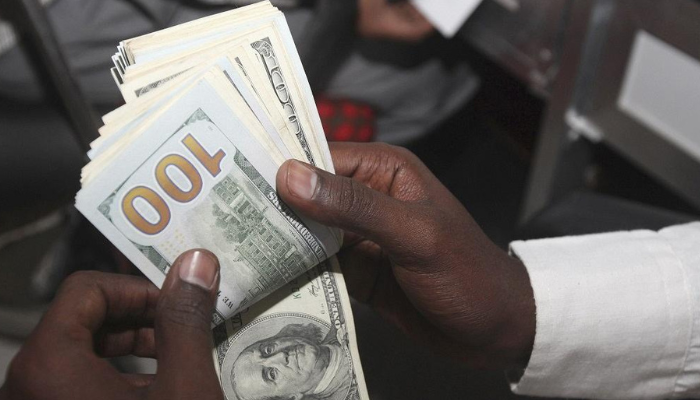
Nigeria has achieved its target of attracting $1 billion in monthly diaspora remittances through formal channels, as the Central Bank of Nigeria (CBN) sets a new ambition of increasing inflows to $1.5 billion monthly by the end of the first half of 2027.
Olayemi Cardoso, governor of the CBN, disclosed this at the 61st annual bankers’ dinner organised by the Chartered Institute of Bankers of Nigeria (CIBN) in Lagos.
Cardoso said the achievement followed reforms in the foreign exchange market aimed at improving transparency, strengthening price discovery, restoring investor confidence and expanding access to foreign exchange.
“When I stood before you last year, I spoke of our ambition to increase monthly remittances to $1 billion a month. I am pleased to report that this milestone has been achieved,” he said.
“We are now working towards increasing monthly remittances to $1.5 billion by the end of the first half of 2027.”
He commended licensed International Money Transfer Operators (IMTOs) for their efforts to strengthen transparency, invest in technology and expand formal remittance channels, particularly across Asia.
According to Cardoso, the broader benefits of the foreign exchange reforms include greater certainty for business planning and investment, renewed investor confidence, easier settlement of international payment obligations and a significant increase in diaspora remittances through formal channels.
He said Nigeria had moved away from a multiple exchange rate system, where access to foreign exchange was disproportionately available to a few, towards a more transparent and market-driven framework that provides broader and more equitable access.
The CBN governor also highlighted improvements in international payment access, noting that Nigerians can now use their naira-denominated cards to make payments while travelling abroad.
He said the changes had restored convenience and dignity to Nigerians conducting international transactions, compared with the difficulties they experienced under the previous foreign exchange regime.
Beyond remittances, Cardoso said the naira had strengthened by approximately 6 percent over the past year, while daily foreign exchange market turnover had at times exceeded $1 billion.
He added that activity in the fixed income market had also improved, with daily turnover averaging N1.5 trillion, supported by a credible and tradable benchmark yield curve extending to 10 years.
Cardoso described the developments as encouraging signs of growing confidence in Nigeria’s financial markets, stressing that deeper markets would support efficient price discovery and capital allocation.
He said the next phase of financial sector reforms would focus on deepening liquidity, broadening market participation and expanding the range of financial instruments available to businesses and investors.
The CBN governor, however, noted that a well-functioning foreign exchange market did not mean exchange rates would remain static, as market-determined currencies were expected to move in response to economic fundamentals and global developments.
He said the apex bank remained prepared to deploy external reserves where necessary to address disorderly market conditions and mitigate the impact of external shocks.

Hope Moses-Ashike is an Associate Editor, Banking and Finance, with more than a decade of experience reporting on Nigeria’s financial system and broader economy. She closely tracks market movements, monetary policy decisions, company disclosures, regulatory actions, economic indicators, and global developments, and interprets what they mean for businesses, investors, policymakers, and households. Her reporting helps readers understand complex issues such as inflation trends, foreign exchange market dynamics, interest rate decisions, bank performance, and investment risks.
She also covers major international events and periodically travels to Washington, D.C., to report on the World Bank/IMF Spring and Annual Meetings.
Her dedication to financial journalism has earned her multiple recognitions and invitations to high-level professional development programmes. She is an alumna of the International Visitors Leadership Programme (IVLP) in the United States and holds an Advanced Financial Journalism Certificate from the Press Association Training in London, UK. Her other notable achievements include completing the Lagos Business School CMC Programme, the Bloomberg Media Africa Initiative Programme, and a Master Class in Journalism at Rhodes University in South Africa.