Nigerian environmentalist, Adenike Akinsemolu, calls for measurable action on Africa’s environmental challenges at high-level UNEP dialogue
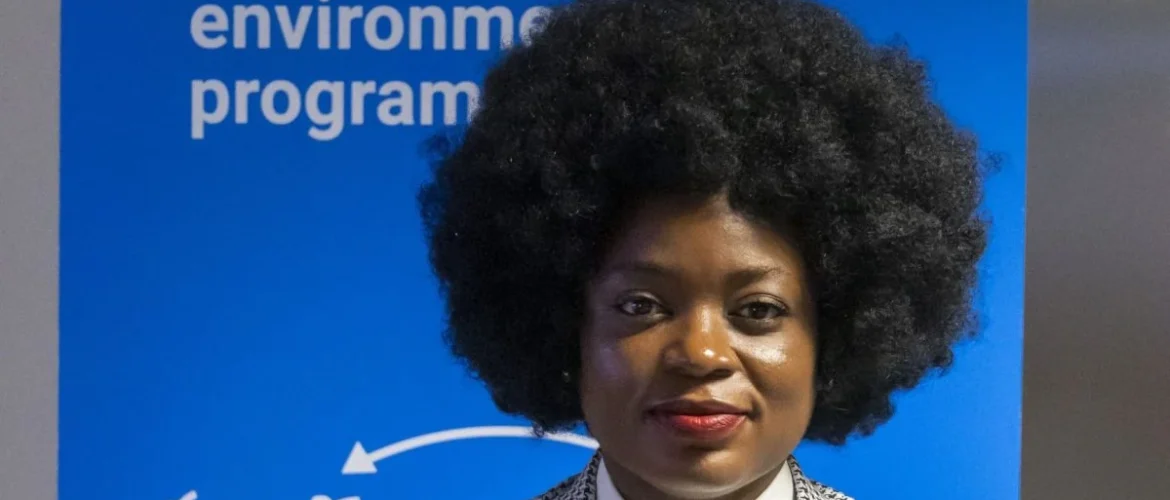
…GEO-7 Lead Author joins Sir Robert Watson, UNEP Chief Scientist and distinguished African experts to discuss translating global environmental evidence into practical solutions for the continent.
Nigerian environmentalist, sustainability scholar and Lead Author of the United Nations Environment Programme’s (UNEP) seventh Global Environment Outlook (GEO-7), Dr Adenike Akinsemolu, has called for stronger environmental accountability, practical implementation and measurable outcomes in addressing Africa’s interconnected environmental challenges.
She made the call during the high-level African regional dialogue, A Future We Choose: From Global Insights to Solutions for Africa through the GEO-7, convened by UNEP’s Regional Office for Africa and Office of Science on 23 November 2026.
The international dialogue brought together leading environmental scientists, GEO-7 authors, academics and sustainability experts to examine how the findings and transformation pathways presented in GEO-7 could inform environmental policy, research and practical action across Africa.
Among the distinguished contributors were Sir Robert Watson, GEO-7 Assessment Co-chair and Professor Emeritus at the University of East Anglia; Dr Åsa Persson, UNEP Chief Scientist and Director of the Office of Science; and Professor Kevin N. Nwaigwe, GEO-7 Coordinating Lead Author and Professor of Mechanical Engineering at the University of Botswana.
The panel also featured Bonmwa Fwangkwal, GEO-7 Lead Author and Circular Economy Expert at the African Development Bank Group; Dr Monica Kerretts-Makau, GEO-7 Coordinating Lead Author and Academic Director for Africa at Thunderbird School of Global Management; and Dr Sènankpon Tcheton, GEO-7 Fellow and Researcher at the University of the Witwatersrand. The discussion was moderated by Cyrille-Lazare Siewe, UNEP’s Science-Policy Regional Coordinator.
Bringing Africa’s environmental realities into the global conversation
Contributing to the panel discussion, Akinsemolu identified climate change and land degradation as two major environmental risks threatening Africa’s food security, health and livelihoods.
Drawing on the realities of vulnerable coastal communities in Nigeria, she illustrated how environmental deterioration affects not only ecosystems but also household incomes, food availability, public health, education and human dignity.
She cited a 2020 World Bank assessment estimating that flooding, erosion and pollution in Lagos, Delta and Cross River States cost approximately US$9.7 billion in 2018, while referring to a 2025 assessment by the Alliance of Bioversity International and CIAT, which estimated that nearly 494 million hectares across sub-Saharan Africa were experiencing some form of land degradation.
Beyond the scientific evidence, Akinsemolu introduced the concept of environmental corruption, drawing attention to the diversion of resources allocated to environmental protection, weak regulatory enforcement and the failure to implement existing environmental policies.
“Sometimes, the problem is not that we lack environmental policies. It is that we lack the integrity and institutional commitment to implement them,” she observed.
She also challenged the normalisation of irresponsible waste disposal, emphasising that environmental responsibility must be reflected in everyday behaviour as well as government policy. In illustrating this point, she referenced the Officially Green Movement, an initiative of The Green Institute, which encourages individuals to adopt practical environmental commitments, including the pledge: “I will never drop my waste on the floor.”
Her intervention underscored the importance of connecting environmental governance, institutional accountability and individual responsibility in achieving meaningful environmental transformation.
Advocating youth-led green innovation and enterprise
In a further contribution, Akinsemolu addressed the role of universities and governments in equipping African youth to lead green innovation and job creation.
Drawing on her experience establishing the Green Campus Initiative and The Green Institute in Nigeria, she argued that young people must be regarded not merely as recipients of environmental education but as innovators, entrepreneurs and active contributors to Africa’s emerging green economy.
She challenged African universities to reconsider how they measure their contributions to society, asking what it would mean for universities to be assessed not only by the graduates they produce and the research they publish, but also by the environmental problems their students solve and the green enterprises they help create.
She advocated for universities to become living laboratories for sustainability, where students from different disciplines can collaborate, experiment, develop prototypes and transform research into viable enterprises.
She further called on governments to strengthen the enabling environment for young green entrepreneurs through seed funding, mentorship, access to markets and incentives for environmentally responsible businesses.
According to Akinsemolu, Africa must move beyond teaching young people about environmental problems and invest more deliberately in equipping them to develop and commercialise solutions.
A proposal for translating GEO-7 into practical action
One of Akinsemolu’s notable contributions came during the dialogue’s closing discussion, when she proposed a university-led approach to translating GEO-7’s findings into practical community-level solutions across Africa.
Her proposal envisioned stronger collaboration between universities, young innovators, researchers, local authorities, businesses and surrounding communities to develop and demonstrate solutions to pressing environmental challenges.
The proposal attracted the moderator’s interest, with Cyrille-Lazare Siewe indicating that he would return to Akinsemolu to explore the idea further.
Akinsemolu emphasised that Africa’s environmental transformation must be judged by tangible improvements in people’s lives and the condition of the environment, rather than by the number of policies announced, workshops conducted or programmes launched.
Distinguished contributions to Africa’s environmental future
The dialogue also featured important perspectives on the institutional, financial and governance reforms required to translate environmental evidence into action.
In his presentation, Sir Robert Watson, GEO-7 Co-chair, contributed insights into the report’s key messages and transformation pathways, providing the scientific and policy context for the African regional discussion.
Dr Åsa Persson, UNEP Chief Scientist and Director of the Office of Science, delivered the opening remarks, highlighting the importance of strengthening the relationship between scientific evidence, policy and action.
Professor Kevin N. Nwaigwe, a GEO-7 Coordinating Lead Author, contributed to the presentation of the report’s findings and subsequently emphasised the need for greater accountability in climate finance, arguing that resources intended for environmental action should translate into actual implementation rather than being disproportionately absorbed by conferences, retreats and administrative activities.
Other panellists brought perspectives on integrated governance, circular economy and materials and waste systems, as well as the importance of Indigenous and Local Knowledge in environmental decision-making.
Together, the contributions reflected the central message of GEO-7: addressing interconnected environmental challenges requires coordinated transformation across economic and financial systems, energy, food, materials and waste, and the environment.
Building the future Africa chooses
The dialogue concluded with a call for collective action, stronger institutional collaboration and measurable progress in implementing environmental priorities aligned with the African Union’s Agenda 2063, the Sustainable Development Goals and UNEP’s strategic direction.
For Akinsemolu, the discussion reinforced the need to move beyond environmental commitments towards deliberate choices that produce meaningful change.
Reflecting on the dialogue’s theme, A Future We Choose, she emphasised that Africa’s sustainable future would depend on the decisions made today and the willingness of governments, institutions, businesses, universities and communities to translate environmental knowledge into action.
“Because the future we choose must be reflected in the actions we take today,” she concluded.
Akinsemolu is the Founder and Global Director of The Green Institute, an environmental sustainability scholar and pioneer of Green Microbiology. She is also the Founding President of the Society for Green Microbiology and an Honorary Associate Professor at the University of Birmingham. Her work spans sustainability science, environmental education, research, policy engagement and the development of future sustainability leaders.
WATCH TOP VIDEOS FROM NIGERIAN TRIBUNE TV