
Nigeria’s Booming Trade in Deadly Fake Products – THISDAYLIVE
Follow THISDAYLIVE on GoogleAdd us as a preferred source to see more of our stories in Google
As fresh raids expose the networks behind fake medicines, adulterated drinks and unsafe cosmetics, Festus Akanbi examines the human and economic toll and recommends tougher sentences and
confiscation of criminal assets
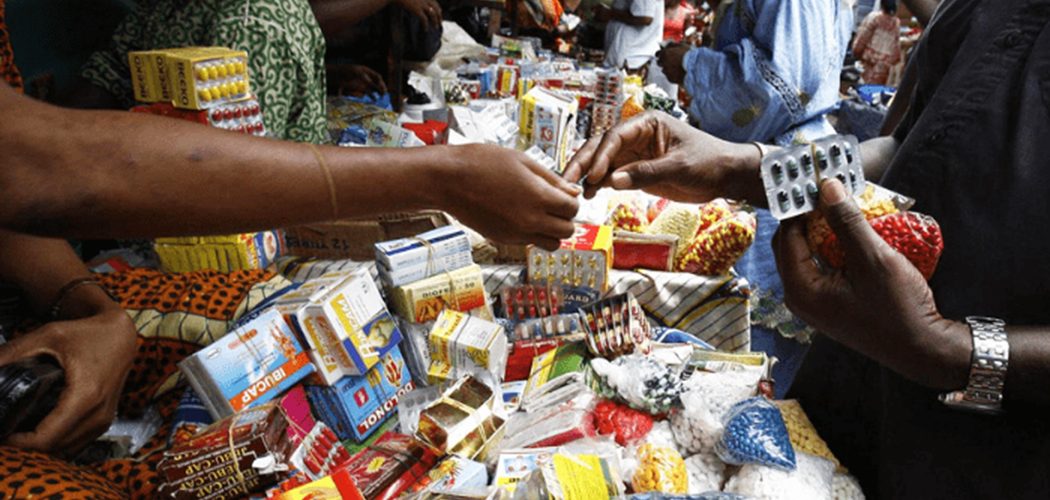
A bottle bearing a familiar label, a tablet of medicine bought to stop a fever, and a cream promising clearer skin, will all give the buyer the impression that the contents match the packaging.
Nigeria’s counterfeiters make money by exploiting that trust. A fresh raid at the Lagos International Trade Fair Complex shows how much of the business depends on the convincing appearance of goods whose contents consumers have little means of checking.
On November 14, the National Agency for Food and Drug Administration and Control (NAFDAC) said officers uncovered a warehouse on the top floor of the Tools and Hardware Complex. They found empty packs labelled Augmentin 625mg and Ampiclox, along with branded bottle caps. The agency also reported finding suspected unregistered cosmetics and packaging materials. Reports on the November operation gave no arrest figure.
But in October, NAFDAC arrested the manager of an unregistered herbal medicine factory it sealed in a residential building in Agege. One products carried a registration number assigned to a legitimate cough syrup.
Earlier, on October 13, officers arrested two suspects at the Trade Fair Complex, where the agency said it uncovered more than 20 illegal stores and seized goods valued at over N2 billion. Suspected activities included altering expiry dates on drinks to put them back on sale.
In August, Lagos State Police Command toannounced the arrest of two suspected members of a pharmaceutical counterfeiting syndicate at a warehouse on Otto Causeway. Police Commissioner, Fatai Tijani, said the suspects were allegedly repackaging pharmaceutical products for distribution.
The police linked the operation to interstate and cross-border supply. Nationwide, NAFDAC recorded 474 new cases, 213 raids, 52 arrests and 179 establishment closures or sealings between January and August. Those figures cover a range of regulated products, including medicines, foods, drinks and cosmetics.
When a Purchase Becomes a Health Emergency
A fake drug deliberately misrepresents its identity, composition or source. A substandard medicine fails applicable quality standards. For patients, either can mean a missed dose of effective treatment at a critical moment, while contamination can cause illness in its own right. The World Health Organisation (WHO) estimates that at least one in ten medicines in low- and middle-income countries is substandard or falsified. The estimate covers those countries collectively. Nigeria’s own rate cannot be inferred from it.
The consequences are documented in Nigeria. An investigation into the 2008–09 diethylene glycol poisoning outbreak identified 57 children aged three or younger who developed acute kidney failure. Fifty-four died. Investigators found that 96 per cent of the children had received My Pikin teething medicine, in which the toxic chemical was detected. On November 18, 2026, the House of Representatives resolved to summon regulators and security agencies after reports that four people in Benue State had died following the use of a suspected poisonous herbal preparation. The reported link remains subject to investigation.
Unsafe cosmetics expose consumers through another route. In 2023, NAFDAC reported that laboratory tests detected mercury in banned Crusader soap recovered from a Lagos Trade Fair warehouse. The agency said consignments had reached supermarkets and cosmetics shops. In March 2026, WHO reported that Nigeria had adopted its first national cosmetics safety policy, covering manufacture, importation, sale, use and disposal. Its effectiveness will depend on testing and surveillance across the markets where these products are sold.
When the Fine is Affordable
In September, the Federal High Court in Lagos convicted Elijah Chigbogu and two companies linked to him after they pleaded guilty to four counts involving fake and unregistered medicines. Justice Musa Kakaki fined Chigbogu N1.5 million following a plea agreement. The medicines listed in the charges included products used to treat hypertension and diabetes. Section 3 of the Counterfeit and Fake Drugs and Unwholesome Processed Foods (Miscellaneous Provisions) Act permits a fine of up to N500,000 for a Section 1 offence, alongside alternatives of five to 15 years’ imprisonment or both penalties. The Chigbogu case involved charges under two statutes. A fixed fine can become an affordable cost of doing business when it bears little relation to the proceeds an operator can retain.
The federal government and National Assembly should set tougher penalties for deliberate, large-scale and repeat offences, with fines that reflect the financial benefit and the gravity of the conduct. Prosecutors should also pursue court-ordered confiscation of criminal proceeds and forfeiture of property proven to have been acquired with illicit earnings or used to facilitate the offence. The Proceeds of Crime (Recovery and Management) Act 2022 already provides a framework for asset recovery. Tracing bank balances, machinery, vehicles and warehouses back to convicted organisers can strip an operation of the money and equipment it needs to restart. That is where forfeiture can give a sentence lasting force.
The Cost Beyond the Raid
Aba illustrates how quickly the problem can return. In December 2023, NAFDAC shut about 240 shops at Eziukwu Market over fake products. In a subsequent operation, it closed another 150 shops, saying illegal activity had continued despite an undertaking by market leaders to expose counterfeiters. Repeated closures at the same market establish persistence. Determining whether the same organisers returned requires investigators to follow ownership, payments and supplies across successive raids.
For households, the first loss is the purchase itself. A patient whose treatment fails may have to pay for another consultation, diagnostic tests and replacement medicine while losing income from missed work. A relative who takes time off to provide care may lose earnings too. Legitimate manufacturers and retailers face different costs. They pay for quality control, compliant packaging and traceable distribution, then lose sales to operators who evade those expenses. A convincing imitation can also leave customers blaming the genuine brand for a product it never made.
The value of seized stock measures the scale of a particular operation. The wider economic bill would require separate evidence on lost sales, healthcare spending and income forgone. On the enforcement side, publishing case outcomes, sentences and recovered assets would show how often arrests lead to penalties that reach the people financing the trade. WHO also identifies limited access to affordable, genuine medicines as a factor driving patients to unsafe suppliers. Keeping legitimate treatment within reach reduces the demand counterfeiter’s exploit.
A family buying medicine for a sick child cannot test its ingredients at the counter. Nor can the buyer of a bottle of spirits establish from an intact seal what is inside. That burden falls on regulators, laboratories and suppliers who can trace a product back to its source. The test of the crackdown is whether fewer unsafe products reach those counters and whether the people convicted of supplying them lose the means to do it again.
2 Attachments