Senate demands cheaper cooking gas, probes 223.7 tonnes of LPG exports
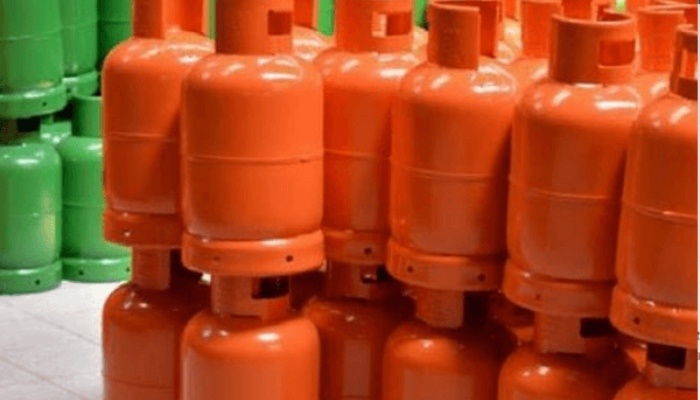
The Senate has raised concerns over the inadequate supply of Liquefied Petroleum Gas (LPG) to the domestic market, questioning the volume of the commodity being exported despite the need to make cooking gas more affordable for Nigerians.
The Senate Committee on Gas Resources, chaired by Jarigbe Jarigbe, senator representing Cross River North, raised the concerns on Thursday during an investigative engagement with stakeholders in the gas industry over export revenue remittances and domestic LPG supply.
The committee, which met with officials of the Nigeria Customs Service (NCS), the Nigerian Upstream Petroleum Regulatory Commission (NUPRC) and other industry stakeholders at the National Assembly in Abuja, sought explanations for the country’s LPG export arrangements amid concerns about supply shortages in the domestic market.
Jarigbe said the situation contradicted the government’s objective of easing the burden of high cooking gas prices on Nigerians, insisting that more of the commodity should be made available locally.
“LPG has to be supplied to the domestic market for the good of the common man as intended with Executive Order 9 issued by President Tinubu to ameliorate the sufferings of the masses on price of gas,” he said.
Although Presidential Executive Order 9, signed by President Bola Tinubu on February 13, 2026, focuses primarily on improving oil and gas revenue remittances to the Federation Account, the senator linked its objectives to the need to improve domestic gas availability and reduce prices.
Speaking with journalists after the meeting, Jarigbe said the committee was determined to establish the reasons for the supply gaps and identify measures to ensure that more LPG reached Nigerian consumers.
“We are already working for Nigerians here, for our people, and that’s why we want to get to the root of it,” he said.
“And we’ll make sure that the price of gas goes down, because when there is adequate supply in response to demand, the price will naturally go down.”
The committee chairman said some industry operators had attributed the export of LPG to the ratio of propane and butane in the product, but argued that blending could address the composition challenge and make more of the commodity suitable for domestic consumption.
“And they give an excuse that the ratio of propane to butane is 80-20, and that’s what they export. But it’s a matter of blending, so that it will be the reverse: the quantity of butane will be 80%, while the quantity of propane will be 20% for local consumption in Nigeria,” he said.
During the session, Caroline Kemen Niagwan, deputy comptroller-general of the Nigeria Customs Service in charge of Tariff and Trade, presented the agency’s records of LPG exports, disclosing that 190.8 metric tonnes were exported in 2024, while 32.8 metric tonnes were recorded in 2025.
She said the cumulative volume of LPG exports recorded for the two-year period stood at 223.699 metric tonnes.
“The summary is that a total of 190.8 metric tons of LPG was exported in 2024. A total of 32.8 metric tons was exported in 2025, and the cumulative volume of LPG exports recorded for the two-year period stood at 223.699 metric tons,” she said.
Niagwan, however, told the lawmakers that the Customs Service had no record of LPG exports at Escravos in 2026, explaining that the export process required clearance certificates from the Federal Ministry of Industry, Trade and Investment and declarations by exporters through the agency’s automated system.
“For the 2026 export of LPG at Escravos, our system showed no records of export because, for you to make an export, there must be an export clearance certificate sent to us by the Federal Ministry of Industry, Trade and Investment, which we send to the commands, and the exporter must make a declaration on our system, which is automated,” she said.
“When we profiled our system, we didn’t have any exports in the whole of 2026. We only had for 2024 and 2025.”
She further disclosed that approved LPG export volumes stood at 400 metric tonnes for the Nigerian National Petroleum Company Limited and 386.4 metric tonnes for Chevron.
Providing an explanation for the export arrangements at Escravos, Enorense Amadasu, a representative of the NUPRC, said the offshore facility was originally designed to accommodate the evacuation of LPG for export.
He explained that the facility operated under a joint venture between the Nigerian government, represented by the NNPC, and Chevron, with the parties having existing export arrangements.
Amadasu, however, said the commission had engaged the operator to explore the possibility of redirecting some of the LPG to the domestic market.
He disclosed that Chevron had, in 2024, issued a public request inviting Nigerian LPG off-takers to indicate interest in arrangements that could facilitate the supply of some of the product to the local market.
Read also: Financing gaps hold back Northern Nigeria’s industrialisation drive
“Having said that, when we got this request, we decided to engage the operator to get more details, and that was when we were made to understand that Chevron had actually put out a public request sometime in 2024, to request for Nigeria LPG off-takers to come for them to discuss the possibility to working with some of them to see how they can work it to change some of this to the domestic market,” he said.
Also speaking, Aniekan Bassey, senator representing Akwa Ibom North-East and a member of the committee, said the engagement provided an opportunity for lawmakers to examine challenges confronting the oil and gas industry, particularly issues of accountability, regulation and the management of the country’s petroleum resources.
Bassey, in a statement after the meeting, said he remained committed to supporting legislative interventions that would promote transparency, strengthen institutional accountability and protect Nigeria’s economic interests.
The committee is expected to reconvene next Tuesday for further engagement with relevant stakeholders as it continues its investigation into LPG supply gaps, export revenue remittances and measures to increase the volume of cooking gas available to domestic consumers.