Taiwan, India leverage cultural diplomacy to deepen bilateral relations
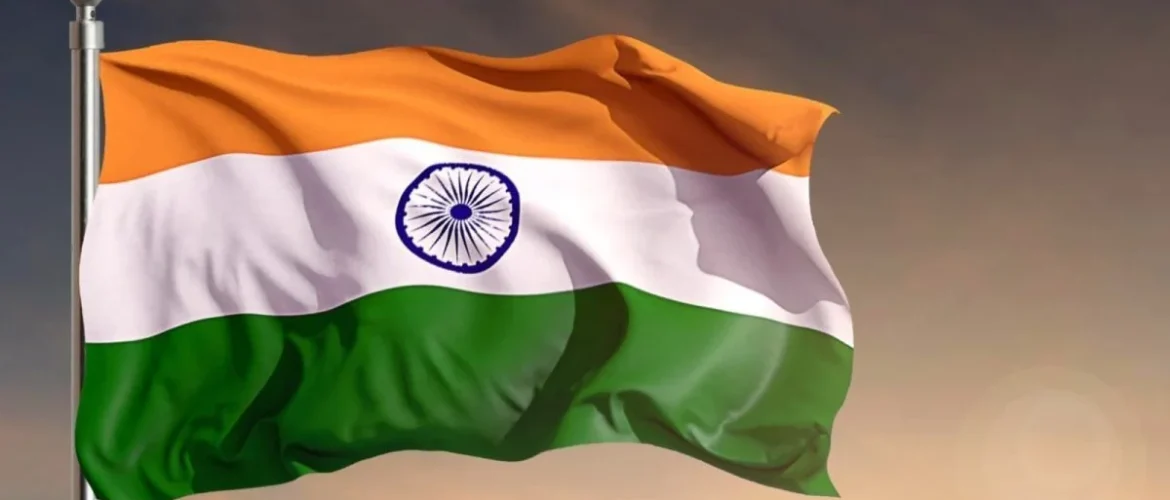
Taiwan and India are exploring cultural diplomacy and grassroots engagements to deepen bilateral relations, with a Diwali celebration featuring performances of popular Indian songs by Taiwanese high school students highlighting the growing people-to-people connections between the two sides.
The celebration, held at Tamsui Fisherman’s Wharf in Taiwan, attracted members of the Indian diaspora and participants from different nationalities, with Taiwanese attendees particularly enthusiastic about the cultural performances.
One of the major highlights was the performance by the 72nd session of the Chenggong High School Band, which presented a fusion of Indian songs from different regions, drawing applause from Indians at the venue and reactions from audiences on social media.
The band performed popular Indian compositions, including Dil Hai Chota Sa by A.R. Rahman, Yad Lagla, a Marathi-language song composed by Ajay-Atul, and Ekla Cholo Re, written by Nobel laureate Rabindranath Tagore, before concluding with the mystic composition Homage to Bharat.
The rendition of Ekla Cholo Re, which translates as “walk alone”, was particularly significant given the song’s historical and cultural importance.
Written by Tagore in 1905 during India’s Swadeshi movement against British colonial rule, the Bengali patriotic song promotes individual courage, self-reliance and the determination to stand for one’s convictions even when others are unwilling to take the first step.
The song became a source of inspiration during the struggle against British rule and continues to resonate with people and nations advocating independence, freedom and individual rights.
Its performance by Taiwanese students demonstrated how music can transcend geographical and cultural boundaries, connecting people through shared values and historical experiences.
Similarly, the performance of Yad Lagla, a popular Marathi song about affection, infatuation and the excitement of falling in love, attracted positive reactions from people in Maharashtra, a western Indian state.
Many expressed appreciation for the Taiwanese students’ decision to perform a regional-language song, describing the experience of hearing a familiar cultural composition thousands of kilometres from home as particularly meaningful.
Dil Hai Chota Sa, from the 1992 Indian film Roja, conveyed themes of innocence, simplicity and the pursuit of happiness, reinforcing the diversity of India’s musical heritage.
Beyond the performances, the Diwali celebration showcased different aspects of Indian culture through henna art, diya decoration, traditional artwork and food stalls.
Taiwanese participants also joined members of the Indian community on the dance floor towards the end of the event, dancing to popular Bollywood songs.
The event brought together diplomats, students, businesspeople, organisers, performers and artists from both countries, reflecting the growing interest in cultural exchange and mutual understanding.
Although Taiwan and India do not maintain formal diplomatic relations, public engagement and cultural acceptance have become important channels for strengthening their relationship.
The participation of young Taiwanese students in presenting Indian cultural traditions also demonstrated the importance of grassroots cooperation in complementing existing efforts to expand engagement between the two sides.
The growing cultural interaction comes as Taiwan and India pursue closer economic and strategic cooperation in areas including labour mobility, semiconductors, drone technology and chip production.
Direct flights between Taipei and New Delhi are scheduled to commence on December 1, while about 3,000 Indian students are currently studying in Taiwan.
A labour mobility agreement between the two sides is also expected to create opportunities for greater workforce cooperation and to facilitate movement between the two economies.
However, the expansion of economic and institutional cooperation requires stronger public understanding and acceptance to ensure that bilateral agreements translate into meaningful exchanges between citizens.
Cultural diplomacy is therefore expected to play an important role in building trust, encouraging interaction and creating an enabling environment for cooperation in trade, education, technology and labour mobility.
Tagore, whose compositions have been adopted as the national anthems of India and Bangladesh, remains an influential figure whose works promote universal humanism beyond national boundaries.
While a high school band’s performance cannot alter the geopolitical realities surrounding Taiwan and India, the celebration demonstrates how cultural exchanges can build goodwill and strengthen the people-to-people connections needed to sustain a long-term partnership.
WATCH TOP VIDEOS FROM NIGERIAN TRIBUNE TV