UN Women calls on Nigeria’s private sector to turn gender equality commitments into measurable business action
UN Women Nigeria has called on private sector leaders to move beyond commitments to gender equality and take measurable action to advance women’s economic empowerment, strengthen women’s leadership and expand opportunities for women-owned businesses.
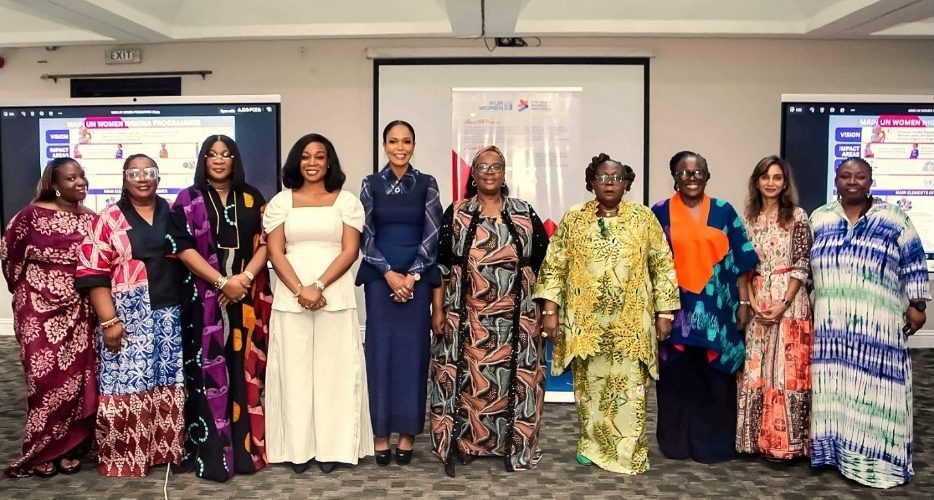
The call was made at a High-Level Private Sector Convening held in Lagos on 20 November, which brought together senior business leaders to explore how gender equality can drive business growth, strengthen competitiveness and contribute to Nigeria’s economic development.
The convening came against a backdrop of persistent gender inequalities and economic pressures. Nigeria ranked 124th out of 148 countries in the 2025 Global Gender Gap Report, while poverty is estimated to have risen from 56 percent in 2023 to 63 percent in 2025. Women-owned businesses also remain significantly underrepresented in public procurement, securing only about 1 percent of contracts. Yet, closing gender gaps could contribute an estimated ₦15 trillion annually to Nigeria’s gross domestic product (GDP).
Participants explored practical ways businesses can translate gender equality commitments into results, including expanding markets for women-led enterprises, diversifying supply chains, strengthening women’s leadership and setting clear procurement targets for women-owned businesses. Discussions also underscored the importance of engaging men as allies in advancing gender mainstreaming across corporate structures.
A key outcome of the convening was a call for stronger coordination among private sector actors, women’s business networks, industry associations and development partners. Participants noted that the absence of a central access point often makes it difficult for businesses to identify women-led enterprises, skilled talent and investment opportunities.
In response, UN Women Country Representative to Nigeria and ECOWAS, Ms. Beatrice Eyong, invited private sector leaders to help shape a joint coordination framework and support the proposed one-stop centre for women in business. The initiative would build on UN Women’s experience establishing resource centres for women in politics and draw on the Women Connect for Development (WOCOD) network, which has more than 50 million members.
Ms. Eyong also highlighted the progress Nigerian companies are making in advancing women’s leadership, noting that these efforts deserve greater visibility and recognition.
The convening acknowledged MTN Foundation as UN Women Nigeria’s first private sector partner, through the Y’ellopreneur Rural Women Economic Empowerment Programme, which has supported pilot initiatives in Cross River and Kano States.
With the 16 Days of Activism against Gender-Based Violence running from 25 November to 10 December 2026, participants also highlighted the economic consequences of gender-based violence (GBV) and the role of businesses in prevention and response. Women At Risk International Foundation (WARIF) noted that GBV costs Nigeria an estimated 1.5 percent of GDP annually, underscoring the economic imperative of investing in prevention.
The private sector was encouraged to support the Empower HER GBV Initiative and its efforts to mobilise resources for the GBV Fund, strengthening prevention and response services for women and girls.
UN Women reaffirmed its commitment to deepening engagement with the private sector and announced plans to open its Lagos office in January 2027. The office will advance priorities including establishing a single access point for women in business, generating data on women’s leadership in the private sector, providing investment-readiness support for women-led enterprises and scaling up private sector investment in GBV prevention through the Empower HER GBV Fund initiative.
The convening reaffirmed a shared message: gender equality is not only a social imperative but also a business and economic priority. Turning commitments into measurable action will be critical to unlocking women’s economic potential and accelerating Nigeria’s development.