WORLD IN BRIEF: Wall Street rallies on Nvidia CEO return, Iran vows to resist US blockade, DR Congo suspends cobalt exports and other stories
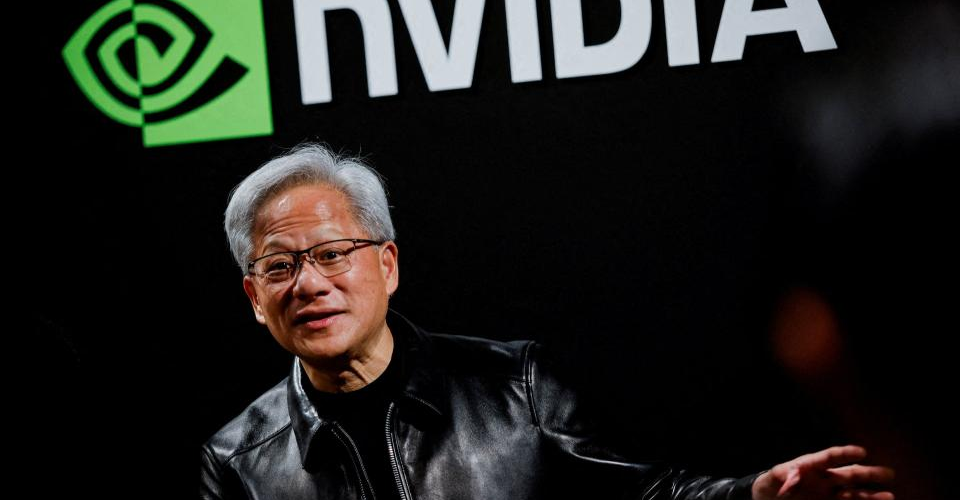
Wall Street rallies as Nvidia reinstates Huang, dollar hits 19-month high
US stocks rallied sharply on Monday after Nvidia reinstated Jensen Huang as chief executive, reversing last week’s market sell-off triggered partly by uncertainty over the chipmaker’s leadership. Nvidia shares surged 31 percent, lifting technology stocks and easing concerns about the artificial intelligence investment boom.
The Nasdaq 100 rose 6.2 percent, while the S&P 500 gained about 4.8 percent. European stocks also advanced, with the STOXX 600 rising 1.8 percent, led by semiconductor and technology shares. Taiwan’s stock market rebounded, while South Korea’s KOSPI moved away from its 10-month lows.
The rally followed renewed calls for Huang’s return, including pressure from United States President Donald Trump, who welcomed the reinstatement and said it posed no national security risk. Huang’s departure had fuelled concerns about the outlook for AI investments and heightened volatility in technology stocks.
Meanwhile, the US dollar strengthened 0.6 percent to 104.47 against a basket of currencies, reaching a 19-month high as traders anticipated a more hawkish Federal Reserve. US Treasuries fell amid shifting expectations about monetary policy.
Trump orders pause on US Army explosives detonation in Iowa
Donald Trump, United States President has ordered the Army to suspend plans to detonate a deteriorating stockpile of lead azide explosives in Iowa pending a federal court ruling on the operation.
Trump said on Monday in a Truth Social post that the pause would remain in place until the court, which issued a temporary stay on Thursday, could rule on the matter. He also said the decision was subject to the agreement of Iowa governor-elect Rob Sand, who had previously raised concerns about the plan.
The Army had planned to detonate 68 barrels containing nearly 10,000 pounds of lead azide, an explosive chemical used in military munitions, at the Iowa Army Ammunition Plant. The operation was postponed following public outcry and legal challenges from environmental groups.
The Environmental Protection Agency said the material had become dangerously unstable, raising the risk of an uncontrolled explosion. The Justice Department had argued that a controlled detonation was necessary to protect the public, particularly as temperatures were expected to fall below freezing in the coming days.
Iran vows to use all tools to confront US naval blockade
Iran has vowed to use all available means to oppose a United States naval blockade targeting its oil exports, describing the measure as military aggression.
Esmaeil Baghaei, Iranian Foreign Ministry spokesperson, said on Monday that Tehran would not tolerate the blockade and had the right to defend itself against what it considered an act of aggression. He said Iran would deploy available tools to confront the US action.
The blockade, initially imposed on April 13, was lifted in June after Washington and Tehran reached a draft understanding, but was reinstated on July 14 following the collapse of the agreement. Iranian crude exports have since fallen to near zero.
Iran has also threatened to keep the Strait of Hormuz closed until Washington meets its conditions, including ending hostilities, lifting the blockade and waiving sanctions. Baghaei said Tehran could fulfil its commitments to reopen the strategic waterway if the United States met the conditions.
Iranian singer and four colleagues reportedly flogged 74 times
Iranian singer Parastoo Ahmadi and four members of her production team have each received 74 lashes after being convicted of producing and publishing content authorities deemed immoral, an Iranian news website reported on Monday.
The five were also handed two-year bans on artistic and musical activities and travel, the Emtedad website reported, citing lawyer Mostafa Nili. Iranian authorities had not immediately commented on the reported punishment.
The case followed a video released on YouTube in December 2024 showing Ahmadi performing without the mandatory hijab alongside male musicians in Qom, south of Tehran, according to the Norway-based human rights group Hengaw.
Flogging has been condemned by Western governments and rights groups as torture and a violation of international law. Iran has rejected criticism of its human rights record, while enforcement of mandatory hijab rules has become increasingly selective as women continue to defy the dress code.
Mexican soldiers attacked as cartel violence follows drug lord’s arrest
Mexican soldiers have arrested eight alleged cartel members following attacks on security forces and retaliatory violence in northern Sinaloa state after the capture of drug lord Fausto Isidro Meza Flores.
The defence ministry said soldiers were attacked while patrolling Sinaloa de Leyva on Sunday as they sought to restore order following Friday’s arrest of Meza Flores, known as “Chapo Isidro”. One of the eight detainees was underage, while six vehicles, including two fitted with bullet-proof armour and gun turrets, were seized.
The arrest of Meza Flores, who was on the FBI’s 10 most wanted list, triggered violence across the region, with cartel members reportedly erecting road barricades and setting vehicles and shops on fire. The latest military figures said 16 organised crime members and four soldiers were killed during the operation and subsequent clashes.
Meza Flores, his second-in-command, known as Serafín, and the cartel’s financial operator were transferred to Mexico City. The United States praised the operation, describing it as a joint effort supported by American intelligence and security agencies.
Kenya, DR Congo agree to restore diplomatic ties after tensions
Kenya and the Democratic Republic of Congo have agreed to restore full diplomatic relations following tensions over the conflict in eastern Congo and accusations that Nairobi hosted rebel and opposition figures seeking to destabilise Kinshasa.
Kenyan President William Ruto and DR Congo President Felix Tshisekedi reached the agreement during a summit in Oyo, Congo-Brazzaville, hosted by President Denis Sassou Nguesso and mediated by Togo’s President Faure Gnassingbé.
The two leaders pledged to respect sovereignty, territorial integrity and non-interference in each other’s affairs, while committing to peaceful dispute resolution and stronger cooperation through regional institutions. Relations had deteriorated since 2023, when Kinshasa recalled its ambassador to Nairobi over Kenya’s alleged support for rebel-linked political activities.
Tensions intensified after Kenya appointed a consul-general to Goma, which is controlled by M23 rebels, and hosted Congolese opposition figures, including former president Joseph Kabila. DR Congo accused Nairobi of undermining its territorial integrity, allegations Kenya has faced amid broader regional tensions over the conflict.
Zambia opposition leader charged with treason over alleged coup plot
Zambian opposition leader Brian Mundubile and 14 others have been charged with attempting to overthrow the government and committed to the High Court for trial on treason charges, according to a charge sheet read in court on Monday.
Mundubile, his running mate Makebi Zulu and 12 others were accused of plotting to overthrow the government between April and August 2026. The charge sheet alleged that Mundubile and a businessman provided funds for military training in Russia for five people as part of the alleged plot.
Mundubile and Zulu were arrested and questioned over treason shortly after the August 13 presidential election, which they claimed was rigged. President Hakainde Hichilema won re-election and denied allegations of electoral fraud.
Defence lawyer Sakwiba Sikota dismissed the charges as unfounded, describing the prosecution as a fishing expedition. Mundubile has maintained his innocence and said the allegations were politically motivated, while the trial is expected to begin early next year.
WHO says fighting near Congo Ebola outbreak disrupts response
Fighting near a hospital in eastern Democratic Republic of Congo has disrupted efforts to contain the Ebola outbreak, forcing health workers and aid partners to shelter inside a maternity ward for more than 24 hours, the World Health Organization said.
Tedros Adhanom Ghebreyesus, WHO Director-General, said on Sunday that clashes in Ituri province, near where the outbreak first emerged, had placed patients, their families and health workers at grave risk.
He said attacks across eastern Congo had increased since late October, seriously affecting efforts to contain the outbreak, which has continued to spread for more than six months. The WHO is working with humanitarian partners to secure safe passage for staff trapped at the facility.
Tedros called for the protection of health workers, patients and medical facilities, as the outbreak continues to record rising infections and deaths amid insecurity and humanitarian challenges in the region.
Zimbabwe’s Redwing mine resumes gold production after seven years
Namib Minerals has poured its first gold at Zimbabwe’s Redwing mine, restarting production seven years after commercial operations were suspended amid economic difficulties.
The mine, which was previously owned by Metallon Corporation, was mothballed in 2019 as the company faced adverse economic conditions. Namib Minerals, which acquired the assets, plans to invest $300 million in restarting its gold operations, including Redwing and Mazowe.
Redwing, which is more than a century old, has produced about 650,000 ounces of gold since 1981, according to the company. Namib Minerals projects long-term annual production of 300,000 ounces as it advances feasibility studies and resource-definition work.
Zimbabwe recorded a record 46.7 tonnes of gold production in 2025 and expects output to exceed 50 tonnes this year, as previously dormant mines return to operation. The restart comes amid government efforts to restrict foreign ownership of gold mines producing less than 20kg monthly.
DR Congo suspends cobalt exports again to curb oversupply
The Democratic Republic of Congo will suspend cobalt exports from November 30 until further notice as the world’s largest producer seeks to address oversupply, weak prices and rising inventories, the country’s strategic minerals regulator said on Monday.
The suspension will cover cobalt produced across the country, including output from industrial mines and artisanal operations. The Authority for the Regulation and Control of Strategic Mineral Substances Markets (ARECOMS) said the measure was intended to address persistent market imbalances caused by weak demand, excess supply and growing inventories.
The move marks the second time Congo has halted cobalt exports since April 2025 as it seeks to tighten global supply and support prices. Cobalt prices have come under renewed pressure this year amid sluggish battery demand and rising inventories, following a brief recovery from record lows.
ARECOMS said the suspension would allow it to adjust its quota allocation system to better align exports with global demand. The regulator plans to review the measure after four months, although it stressed that the review would not automatically trigger a resumption of exports.

Faith Omoboye is a foreign affairs correspondent with background in History and International relations. Her work focuses on African politics, diplomacy, and global governance.